
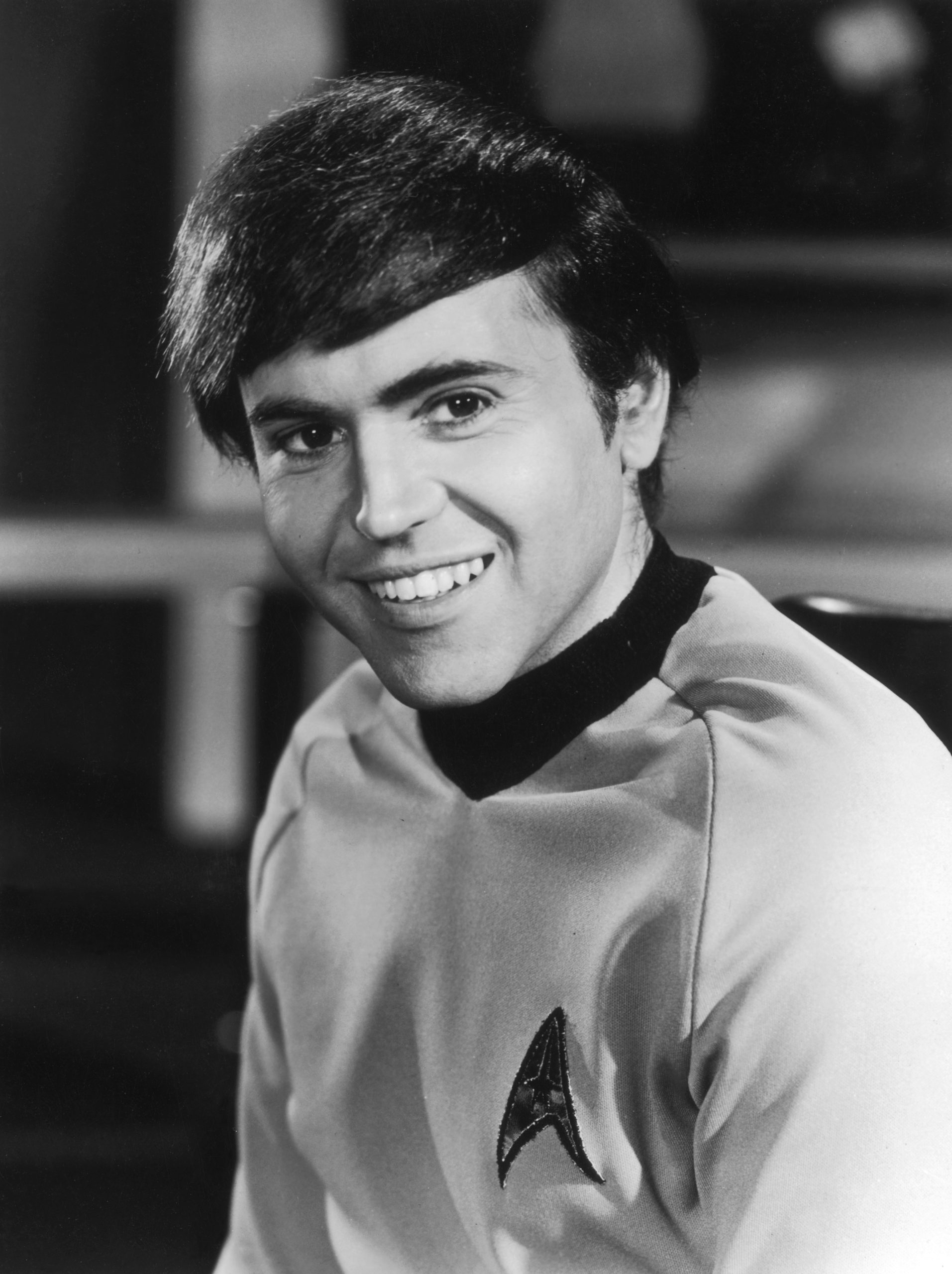

Some weeks land harder than others. On Sunday 25 October, Walter Koenig died at his home in North Hollywood, aged 90. Three days later, on Wednesday 28 October, Sir Patrick Stewart died at his home in Los Angeles, aged 86. Two men of the Enterprise, three days apart. William Shatner called it “a heartbreaking week”, and as one of the last two survivors of the original bridge, he would know.
This is not a product post. I spend my days configuring retro-gaming handhelds — keeping the games people grew up with alive and playable — and the instinct behind that work is the same one that keeps a beloved series on the shelf. The good things are worth keeping. So this is simply a fan paying his respects.
Walter Koenig — the navigator who kept coming back
Koenig joined Star Trek in its second season, in 1967, as Ensign Pavel Chekov: the young navigator with the Monkees mop-top and the cheerful conviction that everything worthwhile was invented in Russia. Gene Roddenberry added him to win over younger viewers, and it worked — most of his early fan mail came from children.
He played the role through the end of the series in 1969 and then through seven films, from 1979 to 1994. The high-water mark for many of us is Star Trek IV: The Voyage Home (1986), in which Chekov, stranded in 1980s San Francisco, goes hunting for “nuclear wessels” — and finds an American aircraft carrier named Enterprise. It is one of the most-loved comic sequences in the whole film series, and it works because Koenig plays it absolutely straight.
What set Koenig apart, though, was what he did after the studio films stopped. He kept saying yes to the fans. He returned as an older Chekov in Star Trek: New Voyages’ “To Serve All My Days” (2006), written by D.C. Fontana as a sequel to “The Deadly Years”. He starred in Star Trek: Of Gods and Men, the 40th-anniversary fan production directed by Tim Russ and released in three parts across 2007 and 2008, alongside Nichelle Nichols. And he came back once more as an Admiral in Star Trek: Renegades (2015). Plenty of actors with his credits keep fandom at arm’s length. Koenig lent the role back to the people who loved it.
He had written for Star Trek too — the first cast member to do so, with the animated series episode “The Infinite Vulcan” in 1973. And for those who knew him outside Trek, he was also the quietly terrifying Psi Cop Alfred Bester in Babylon 5.
George Takei, his friend of nearly six decades — it was Koenig who served as best man at Takei’s wedding — sent him off with the line he deserved: “Keep navigating a steady course.”
Sir Patrick Stewart — the captain who taught by example
For seven seasons, from 1987 to 1994, Stewart’s Captain Jean-Luc Picard was the finest moral education on television, and it never once felt like one. What Picard taught, again and again, was that understanding matters more than winning. He would rather find out why you believed what you believed — and whether he had missed something — than score the point and end the conversation. It is no accident that fans still ask “What would Picard do?” decades on. It has stopped being a catchphrase and become a compass: the question you ask yourself when you would rather be right than be decent.
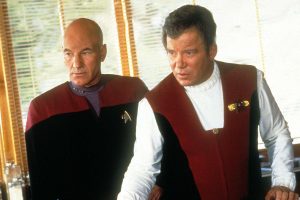
Star Trek Generations (1994) put the two great captains on one bridge, and on paper it was a recipe for a clash of egos — the actor who had owned the Enterprise for decades meeting the actor who owned it now. Instead it became a genuine friendship, one both men spoke of warmly for the rest of Stewart’s life. This week Shatner wrote: “Captain Picard stood for the best of us, and so did the man who played him.”
And he was a Shakespearean first. Stewart joined the Royal Shakespeare Company in 1966, decades before anyone asked him to sit in a captain’s chair, and the stage never let him go. If the BBC re-releases the 2010 filmed Macbeth — Rupert Goold’s modern-dress production, with Stewart as a Macbeth you genuinely fear — I hope people take the chance. It is well worth a watch.
Why I am writing this here
Because it is the same impulse. Retro gaming is not nostalgia for its own sake; it is the belief that the things that shaped us deserve to be kept working and handed on. I just wanted to say, in public, that these two men mattered.
Of the original series bridge crew, only William Shatner and George Takei now remain. The helm is quieter.
May they rest with The Great Bird of the Galaxy*.




Leave a Reply