

TL;DR — the picks
- Best value for PS1: BATLEXP G350 — £94.90, 3.5″ 4:3 screen, PS1 is one of the two systems it’s built around.
- Best all-round 4:3 handheld: Anbernic RG353V — £149.90, the same 3.5″ 4:3 panel with dual-boot firmware and headroom well past PS1.
- Best premium PS1 experience: Anbernic RG405M — £199.90, the largest single 4:3 screen in the range, with PS1 wobble correction and double-resolution.
- Best if you want PSP alongside PS1: Retroid Pocket 3 Plus — £214.90, the most powerful, triple-resolution PS1 and PSP (with one honest caveat below).
All four are in stock and dispatched from the UK. Every price is live on the day this was written.
What actually makes a good PS1 handheld
Here is the part most guides skip. By 2026, almost any retro handheld can run PS1 games. PS1 emulation has been mature for years — it is not a question of whether the device can play it, it is a question of how good that play feels. That comes down to three things.
The screen has to be the right shape. PS1 output is 4:3. Put that on a 16:9 widescreen handheld and you get black bars down both sides, with the image floating in the middle of a wide panel. Put it on a 4:3 screen and it fills the display edge to edge, exactly as you remember it. For PS1 specifically, a 4:3 panel is not a nice-to-have — it is the single biggest thing that decides whether the experience feels right.
The screen has to be big enough to read. PS1 games were designed for a living-room television. On a 3.5″ panel the action is fine, but text and HUD elements get small. Step up to a 4.0″ panel and the same game becomes noticeably more comfortable.
The configuration has to be tuned. This is where a factory-imported handheld and an optimized one part company. PS1 emulation has a famous quirk — straight lines and textures wobble and jitter as the camera moves, because the original hardware had no perspective correction. Modern emulators fix this with a feature called PGXP geometry correction, but it is off by default on most stock firmware, and it has to be turned on and tested per device. The same goes for the resolution multiplier, the controller mapping for DualShock analogue sticks, and the save-state behaviour. A device that runs PS1 and a device that plays PS1 well are two different things.
The picks in detail
Best value — BATLEXP G350 (£94.90)
The G350 is the most affordable device I sell, and PS1 is one of the two systems it is genuinely built around (the other being SNES). It has a 3.5″ IPS panel at a 4:3 aspect ratio and 640×480 resolution, so PS1 games fill the screen the way they should.
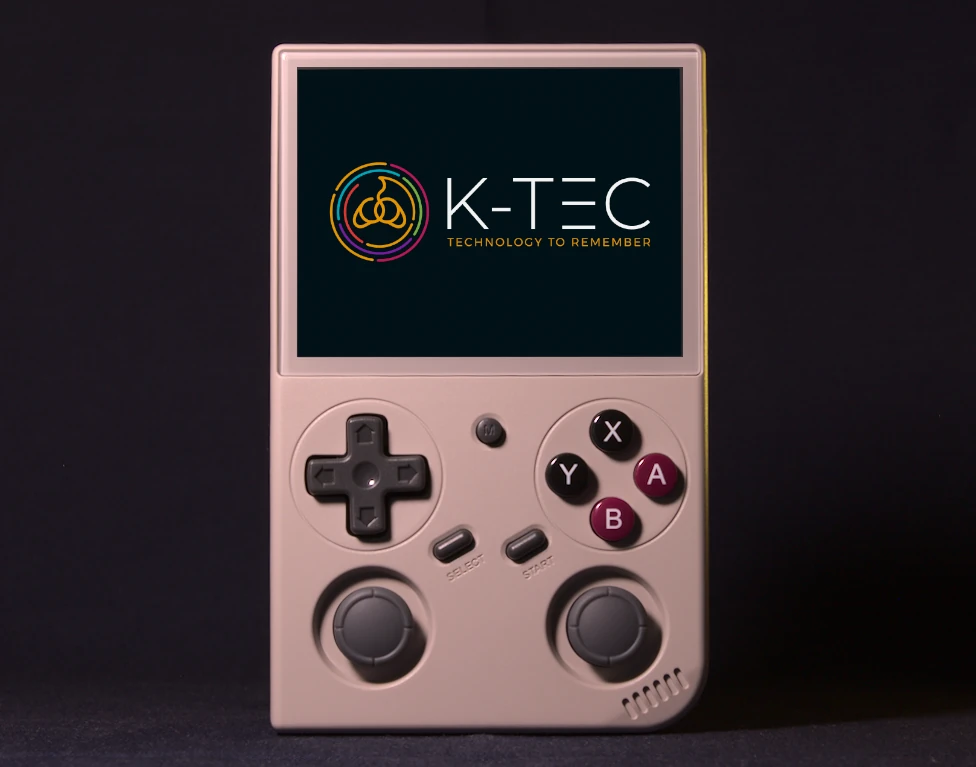
The G350 uses the lightest chip in the range, and that is worth being plain about: PS1 sits at the top of what it does comfortably, rather than somewhere in the middle. If PS1 and the 16-bit era are your target, this is the device that does it for the least money. If you want to climb into N64, Dreamcast or PSP, read on.
- 3.5″ 4:3 IPS screen, 640×480
- PS1 and SNES are its strengths; lighter overall ceiling
- See the G350
Best all-round 4:3 — Anbernic RG353V (£149.90)
The RG353V shares the same 3.5″ 4:3 panel as the G350, but it is a much more capable machine underneath. It is dual-boot — it runs ArkOS (Linux) and GammaOS (Android) — which matters for PS1 because the two firmwares handle a few demanding games differently, and you can pick the one that runs your library best.
PS1 is solid here, and the headroom goes a long way past it: N64, Dreamcast and PSP all run, with PSP in particular performing well once it is tuned. I will be honest about the ceiling — a handful of the heaviest Dreamcast titles do not hit full speed on every game, and 3DO pushes the hardware. But for PS1 specifically, this is the device that does it comfortably and keeps going.
- 3.5″ 4:3 IPS screen, 640×480, multi-touch
- Dual-boot ArkOS + GammaOS-RK3566
- Comfortably past PS1 into N64, Dreamcast, PSP
- See the RG353V
The Anbernic RG353M (£184.90) is the RG353V’s metal-bodied sibling — the same internals and the same 4:3 screen, in a premium aluminium shell. The PS1 experience is identical; the difference is build and feel.
Best premium PS1 — Anbernic RG405M (£199.90)
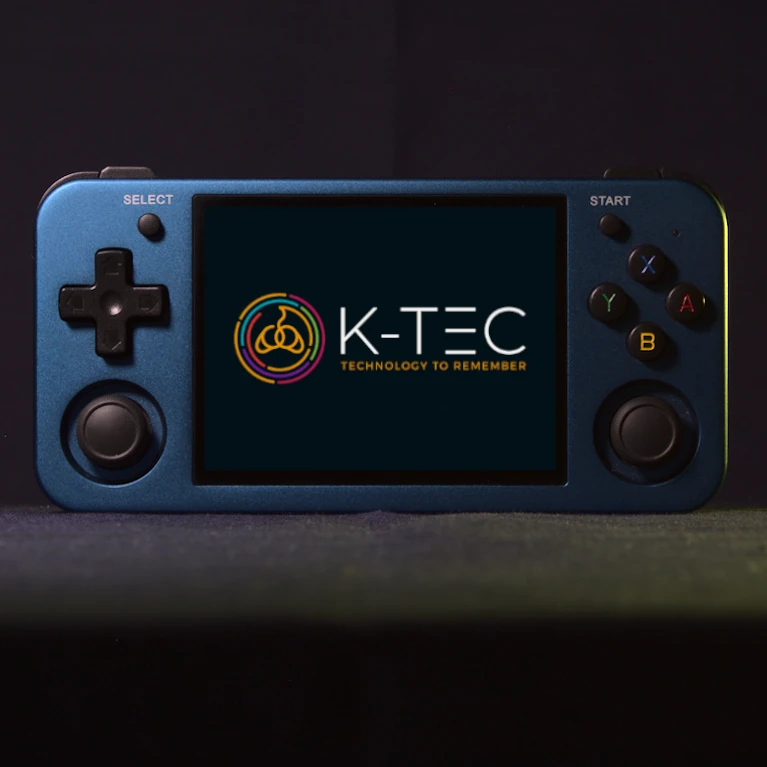
If PS1 is the main reason you are buying, and you want it to look as good as it possibly can on a handheld, this is the pick. The RG405M has the largest single 4:3 screen in the range — a 4.0″ IPS panel — and it is the first device here where I enable two things specifically for PS1.
The first is PGXP geometry correction, which straightens out the wobble and jitter in PS1 textures and geometry. The second is a double-resolution render, which sharpens the image well beyond what the original hardware showed. Together they take a PS1 game from “accurate to the original” to “the original, but clearer than it ever actually was.”
- 4.0″ 4:3 IPS screen, 640×480 (largest single 4:3 panel in the range)
- PS1 with PGXP wobble correction and double-resolution
- Excellent PS1 and NDS, and the power to go further
- See the RG405M
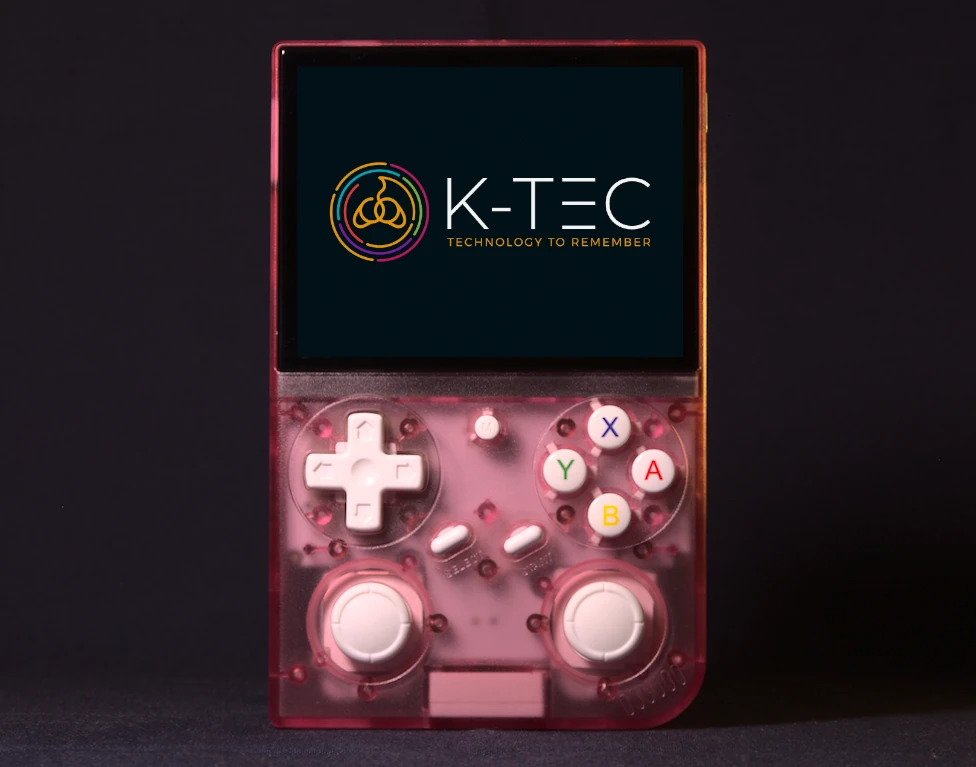
Best for PS1 and PSP — Retroid Pocket 3 Plus (£214.90)
The Retroid Pocket 3 Plus is the most powerful handheld I sell, and it takes PS1 enhancement one step further than the RG405M — triple-resolution, the highest image quality of anything in the range.
I have to flag the honest trade-off, because it is the one that decides whether this is the right pick for you. The Retroid is a 16:9 widescreen device, designed around PSP, Dreamcast and widescreen content. That means a PS1 game — natively 4:3 — renders at triple resolution and sits letterboxed with bars down both sides. You get the sharpest PS1 image here, but not the fullest screen.
So this is the pick when PS1 is part of a wider appetite: you want flawless PSP, you want Dreamcast, and you are happy to accept the letterboxing on pure PS1 in exchange. If PS1 is your sole focus, the RG405M gives you a fuller screen at a lower price.
- 4.7″ 16:9 widescreen IPS, 1334×750
- Triple-resolution PS1 and PSP (the most enhancement in the range)
- PS1 letterboxed — pick this for PSP and Dreamcast alongside PS1
- See the Retroid Pocket 3 Plus
What about the RG DS and the RGB10 MAX 2?
The Anbernic RG DS (£144.90) runs PS1 — I configure it deeply, including per-game DualShock controller mapping and the same wobble correction. But the RG DS is a twin-screen clamshell built around the Nintendo DS, and PS1 plays on the top screen of a two-screen device. If PS1 is your main reason for buying, a single-screen 4:3 handheld is the more natural fit. If NDS is the priority and PS1 is a bonus, the RG DS is the one.
The PowKiddy RGB10 MAX 2 is a 5″ widescreen device, so it has the same letterboxing trade-off as the Retroid — and it is in its final run as I write this. I would not buy it for PS1 specifically.
How to choose
- Tightest budget, PS1 and 16-bit: G350.
- PS1 today, room to grow into N64, Dreamcast and PSP: RG353V.
- PS1 is the priority and you want it to look its best: RG405M.
- PS1 alongside flawless PSP and Dreamcast, widescreen accepted: Retroid Pocket 3 Plus.
Why a configured handheld plays PS1 better than a factory one
Every device on this page has had the factory SD card removed and replaced with a brand-name card from SanDisk, Samsung or Kioxia, and every one is covered by my Lifetime SD Card Guarantee — if the card fails or its data corrupts, I replace the card or restore it. A failed card is the single most common way a retro handheld dies, and it takes your saves with it. I wrote about exactly why that happens, and how I remove the risk, in Why Do Retro Handheld SD Cards Keep Failing?.
Beyond the card, each device has the per-platform tuning described above — the wobble correction, the resolution multiplier, the controller maps, the save-state testing — applied before it leaves me. That is the difference between a device that boots PS1 and one that plays it properly. The full picture of what changes between a factory handheld and one of mine is on The K-TEC Difference.
The short version
For most people buying specifically for PS1, the answer is the RG405M if budget allows, because it pairs the largest single 4:3 screen with the wobble correction and double-resolution that make PS1 look its best. Below that, the RG353V is the safe all-round 4:3 choice, and the G350 is the one that does PS1 well for the least money. If you are unsure which fits you, contact me and I will point you at the right one.
Leave a Reply