

TL;DR — the picks
- Best PSP handheld I sell — final stock, while it lasts: Retroid Pocket 3 Plus — £214.90, the only 4.7″ 16:9 widescreen panel in the range, which is the exact shape the PSP’s 480×272 image is drawn for, so a PSP game fills it edge to edge with no wasted space. Its UNISOC T618 chip runs the full PSP library at full speed through PPSSPP, with triple-resolution rendering for a sharper picture than any other device here. It is the natural fit for the PSP — though I am down to the last units, with no more coming.
- Best in-stock alternative — same chip, a 4:3 panel: Anbernic RG405M — £199.90, the same UNISOC T618 chip running PPSSPP with double-resolution rendering, so the performance is every bit as strong. The trade-off is the screen: its 4.0″ panel is 4:3, so a PSP game letterboxes with black bars above and below the image. If the RP3+ is gone, this is the next-best PSP device — also selling through with no restock planned.
- Best value — final stock, while it lasts: Anbernic RG353V — £149.90, a RockChip RK3566 chip where PSP runs well after my tuning, at the lower price. Its 3.5″ 4:3 panel letterboxes the PSP image the same way. I am not restocking this one.
- The still-stocked 4:3 option: Anbernic RG DS — £144.90, a 4.0″ 4:3 top screen running the PSP through PPSSPP on its RockChip RK3568 chip — the one device here I am keeping in stock, though it is purpose-built for the Nintendo DS.
Every device here is dispatched from the UK. Prices are correct on the day this was written.
What actually makes a good PSP handheld
The PSP is an unusual entry in this series, because it is the one platform where the screen is the whole story — and it inverts the logic of every article before it. For the SNES, the GBA, the N64 and the Dreamcast a 4:3 panel was the correct fit and the widescreen Retroid Pocket 3 Plus was the wrong shape. The PSP flips that: its native resolution is 480×272, a 16:9 widescreen picture, so a widescreen panel is the correct fit and a 4:3 panel is the wrong one. That single fact reorders the whole comparison.
Screen shape is the first decision, and for the PSP it points to one device. The PSP’s 480×272 image is 16:9 — the same widescreen shape as a modern television — so a 16:9 panel fills the screen cleanly, edge to edge, with no wasted space. The Retroid Pocket 3 Plus is the only device I sell with a 16:9 panel: its 4.7″ screen at 1334×750 is the natural home for a PSP game. Every other device in the range uses a 4:3 panel — the RG405M, the RG353V, the RG353M, the RG DS and the G350 — and on any of them a PSP game letterboxes, with black bars drawn above and below the image to pad the 16:9 picture into the taller 4:3 frame. The letterboxing is honest rather than broken, and the game still plays — but you are giving up screen real-estate to empty black space that a widescreen panel would have filled with the picture itself.
Power is the second decision, and here the cheapest chip is honest about its limits. The PSP is a 3D handheld from 2004, and emulating it well asks more of a chip than the 2D platforms earlier in this series did. The UNISOC T618 in the RG405M and the Retroid Pocket 3 Plus runs the full PSP library at full speed — this is comfortably inside what that chip does. The RockChip RK3566 in the RG353V and RG353M runs the PSP well once it is tuned, and the RockChip RK3568 in the RG DS does the same. The RockChip RK3326 in the BATLEXP G350 only manages the PSP partially — it is a 2D-first device, and the PSP sits beyond what it does well. This is the same pattern as the Dreamcast and the N64: the cheapest chip is upfront about where the line is.
The emulator is the third decision, and on the PSP it is the same one everywhere — PPSSPP. Every device on this page runs the PSP through PPSSPP, the standalone PSP emulator, and that consistency is part of why the comparison comes down to chip and screen rather than emulator choice. What differs is how much headroom each chip gives PPSSPP to render above the PSP’s native resolution: the Retroid Pocket 3 Plus renders PSP games at triple native resolution for a noticeably sharper picture, the RG405M at double native resolution, and the RK3566 and RK3568 devices at their tuned settings. A device I have configured means that resolution enhancement is already turned on and tested — a direct import arrives with PPSSPP at its defaults, and that is where the soft, low-resolution picture lives.
Form factor is a matter of taste, not correctness. Every device here carries the controls the PSP library expects — two analogue sticks, a directional pad, face buttons and shoulder triggers — because the PSP was the handheld that normalized twin sticks. What differs is the shape: the RG405M and RG353M are horizontal metal bodies, the RG353V and G350 are vertical pocket-sized devices, the RG DS is a clamshell, and the Retroid Pocket 3 Plus is a horizontal plastic body with ergonomic grips. Pick the one that feels right in your hands; none of them is wrong for the PSP on the controls.
The picks in detail
Best PSP handheld I sell — Retroid Pocket 3 Plus (£214.90, final stock)
If you want the device that fits the PSP the way the PSP was designed to be seen, this is it, and the reason is the screen. The Retroid Pocket 3 Plus has a 4.7″ 16:9 widescreen panel — the only widescreen panel in the range — so a PSP game fills it edge to edge with no letterboxing. That same widescreen panel was the wrong shape for the N64, the Dreamcast and the GBA in the earlier articles in this series; for the PSP it is exactly right. Its 1334×750 resolution is also the sharpest screen I sell at 325 PPI, and I render PSP games at triple native resolution on it for a cleaner picture than any other device here manages.
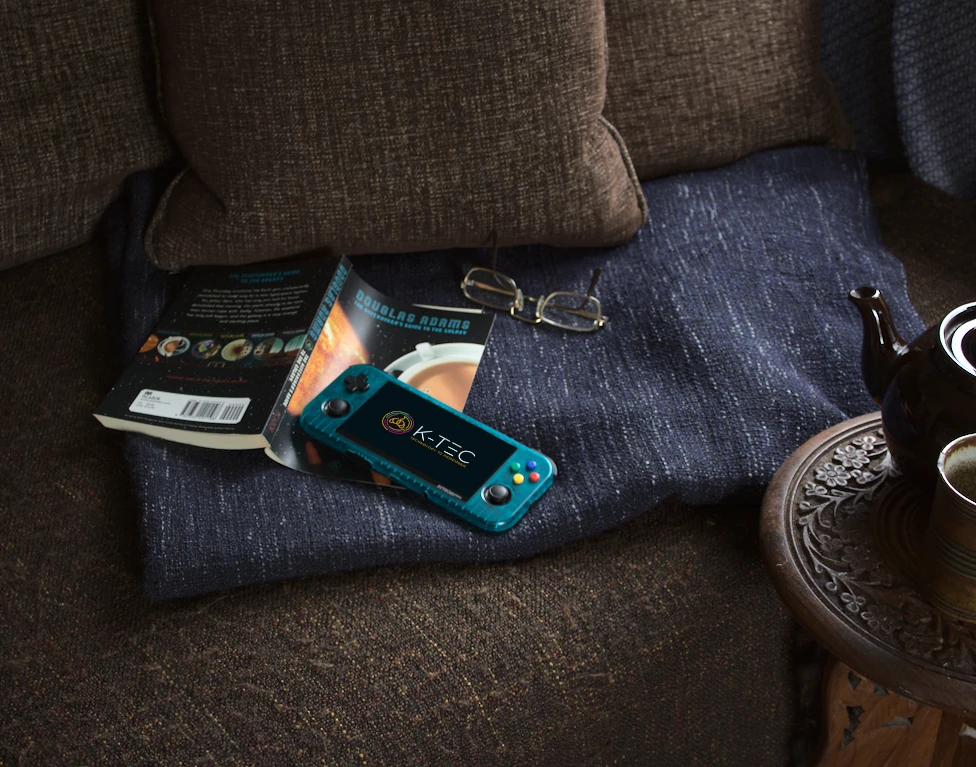
Under the screen the UNISOC T618 chip runs the full PSP library at full speed through PPSSPP, and the device ships on Android with my Daijishou frontend in place of Retroid’s own RetroidOS launcher — Daijishou is the better launcher, which is why I install it instead. I will be straight about availability: the RP3+ is effectively end-of-life, and I am down to the last units with no more coming. If it is the one you want, it is worth acting on.
- 4.7″ 16:9 IPS screen, 1334×750, 325 PPI, multi-touch (PSP fills it edge to edge — the only widescreen panel in the range)
- UNISOC T618 — full PSP library at full speed via PPSSPP, triple-resolution rendering
- Android with Daijishou frontend (installed in place of RetroidOS)
- See the Retroid Pocket 3 Plus
Best in-stock alternative — Anbernic RG405M (£199.90, selling through)
If the RP3+ is gone, or you prefer an aluminium body, the RG405M is the next-best PSP device — same chip, same emulator, a different screen. Its UNISOC T618 runs the full PSP library at full speed through PPSSPP with double-resolution rendering, so the performance is every bit as strong as the RP3+. The honest trade-off is the panel: the RG405M has a 4.0″ 4:3 screen, so a PSP game letterboxes with black bars above and below the image rather than filling it edge to edge. The panel is physically larger than the RG353V’s, but it is the same 4:3 shape, so the letterboxing is identical in proportion — only bigger. If you can live with the bars, you get the same PSP performance in a metal body.
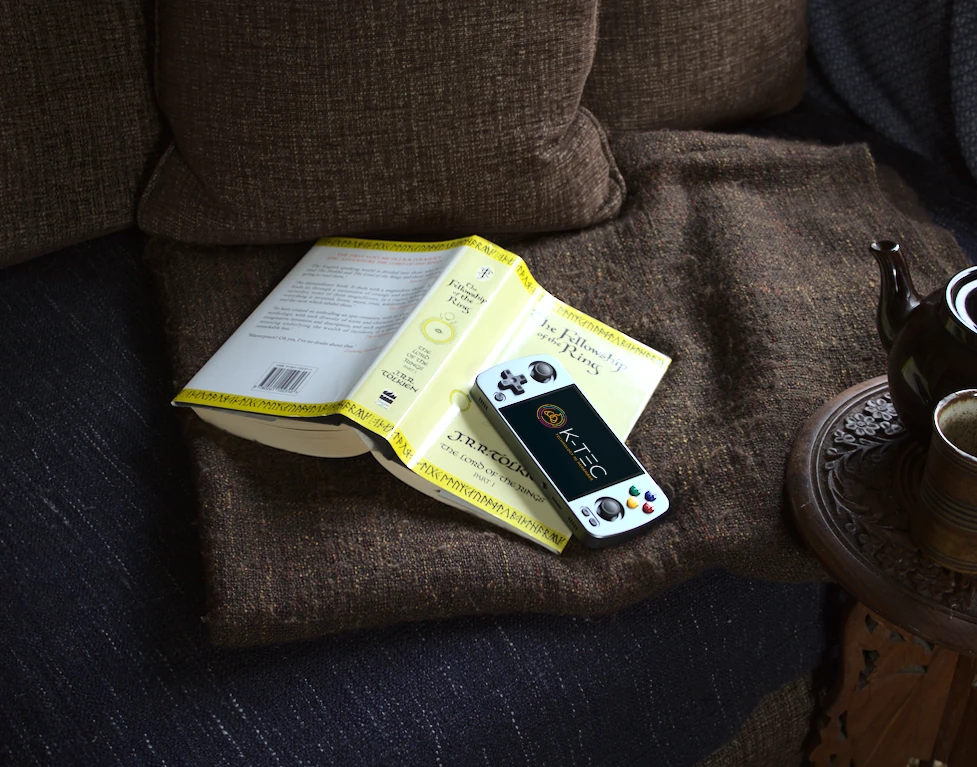
I will be straight that I am selling the last of these with no restock planned. The T618 chip also reaches a long way past the PSP — into PS1 with double-resolution, Dreamcast and the N64 at full speed — so the headroom is real if the PSP is one system among many.
- 4.0″ 4:3 IPS screen, 640×480, 200 PPI (PSP letterboxes with black bars top and bottom)
- UNISOC T618 — full PSP library at full speed via PPSSPP, double-resolution rendering
- Replacement GammaOS Lite firmware with Daijishou frontend
- See the Anbernic RG405M
Best value, while it lasts — Anbernic RG353V (£149.90, final stock)
If you want strong PSP performance at the lower price, this is where the value sits — though I should be straight that I am not restocking the RG353V, so this is final stock. Its RockChip RK3566 chip runs the PSP well once it is tuned — on this device the PSP is a genuine strength rather than a stretch. The 3.5″ 4:3 panel letterboxes the PSP image the same way as the RG405M, just at a smaller size, and I ship it dual-boot — ArkOS (Linux) and GammaOS-RK3566 (Android) — each with its own configured library.
For a PSP buyer who wants solid performance at the value price and can accept the letterboxed image, this is the pick — but it is while-stocks-last, so if it is the one you want it is worth acting on.
- 3.5″ 4:3 IPS screen, 640×480, 228 PPI, multi-touch (PSP letterboxes)
- RockChip RK3566 — PSP runs well via PPSSPP after K-TEC tuning
- Dual-boot ArkOS + GammaOS-RK3566
- See the Anbernic RG353V
Premium 4:3 build — Anbernic RG353M (£184.90, final stock)
The RG353M is the RG353V’s metal-bodied sibling. It shares the same RK3566 internals and the same 3.5″ 4:3, 228 PPI screen, so the PSP experience is identical — the difference is build and feel. The aluminium shell and the Hall Effect sticks (drift-resistant, magnetic) give it a more substantial, more finished feel in the hand. If you like the horizontal shape and want the premium version of the RK3566 PSP experience, this is it — but I am down to the last couple, and I am not restocking it.
- 3.5″ 4:3 IPS screen, 640×480, 228 PPI, multi-touch
- RockChip RK3566 — same PSP performance as the RG353V
- Aluminium body, Hall Effect sticks, dual-boot ArkOS + GammaOS-RK3566
- See the Anbernic RG353M
What about the RG DS and the G350?
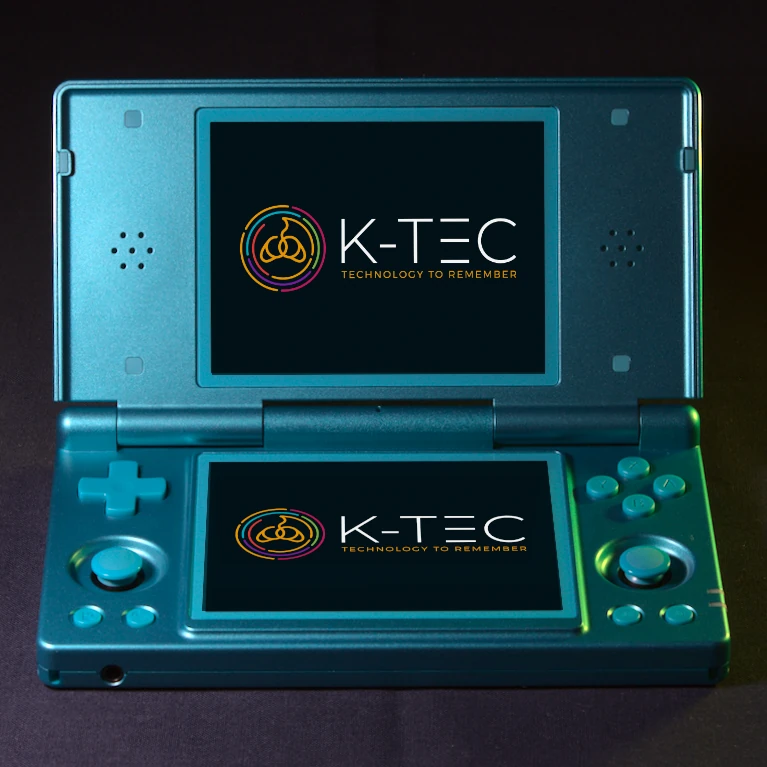
The Anbernic RG DS (£144.90) runs the PSP through PPSSPP on its RockChip RK3568 chip, and it is the one device here I am keeping in stock. Its 4.0″ 4:3 top screen letterboxes the PSP image like any other 4:3 panel, and the dual-screen and touch hardware it is built around exists for the Nintendo DS, which the PSP does not use. The RG DS is the device to buy if the DS is your priority; for the PSP it is workable and available, but it is not its strength.
The BATLEXP G350 (from £94.90) is the value champion of the range, but its RockChip RK3326 chip only runs the PSP partially — it is a 2D-first device, and the PSP sits beyond what it does well. If the PSP is your main reason for buying, the G350 is not the device for it; buy it for the Game Boy, SNES and PS1 libraries it excels at.
How to choose
- You want the PSP device I sell that fits the screen properly, and it is still available: Retroid Pocket 3 Plus. The only 16:9 panel in the range, triple-resolution rendering, the T618 chip — the full package, in final stock.
- The RP3+ is gone, or you want a metal body: RG405M. The same T618 performance via PPSSPP, in an aluminium build — accept the 4:3 letterbox and you keep the performance.
- You want strong performance at the value price — while it lasts: RG353V. RK3566 PSP performance at the lower price, with the same 4:3 letterbox. Final stock.
- You want that same RK3566 performance in a premium metal build: RG353M. Final stock — only a couple remain.
- You are drawn to the BATLEXP G350 on price: it is the wrong chip for the PSP — buy it for the 2D libraries it does well.
Why a configured handheld plays the PSP better than a factory one
Because the PSP asks for power, a 16:9 screen and a properly tuned PPSSPP all at once, the configuration work matters here — and it is the resolution enhancement where it shows most. On every device on this page I have PPSSPP rendering above the PSP’s native 480×272: triple-resolution on the Retroid Pocket 3 Plus, double-resolution on the RG405M, and tuned settings across the RK3566 and RK3568 devices. A direct import arrives with PPSSPP at its defaults, and that is the soft, low-resolution picture you get until you find and turn on the enhancement yourself.
Beyond the software, each device has had the factory SD card removed and replaced with a brand-name card from SanDisk, Samsung or Kioxia, and every one is covered by my Lifetime SD Card Guarantee — if the card fails or its data corrupts, for the life of the device I replace the card or restore it. A failed card is the single most common way a retro handheld dies, and it takes your saves with it. I wrote about exactly why that happens, and how I remove the risk, in Why Do Retro Handheld SD Cards Keep Failing?. The full picture of what changes between a factory handheld and one of mine is on The K-TEC Difference.
The short version
Because the PSP is the one platform in this series that is natively widescreen, the screen decision points to a single device — and that device, the Retroid Pocket 3 Plus with its 4.7″ 16:9 panel, is also the one I am closest to selling out of. Here is the honest situation: the RP3+ is the natural PSP fit, with triple-resolution rendering on its widescreen screen, and it is final stock with no more coming. The RG405M is the next-best — the same T618 chip running PPSSPP, just on a 4:3 panel that letterboxes the image — and it is also selling through with no restock. The RG353V brings the value price for RK3566 PSP performance, in final stock, and the RG353M is its premium metal sibling. The RG DS is the one device I am keeping in stock, running the PSP through PPSSPP on a 4:3 top screen — though it is purpose-built for the DS. If you are unsure which fits you, contact me and I will point you at the right one.
Leave a Reply