
A widescreen handheld built for comfort, configured the way I would want one myself
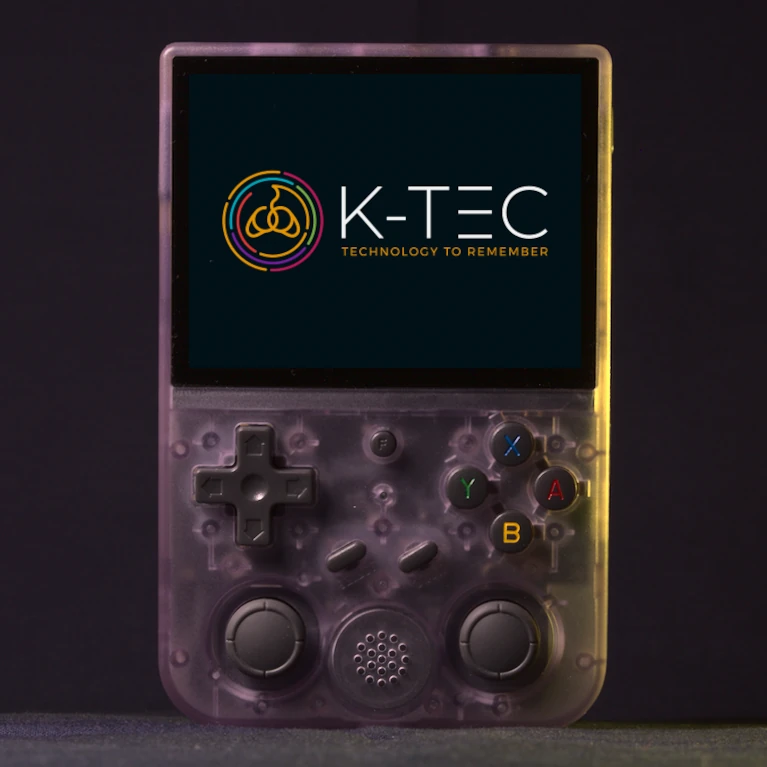
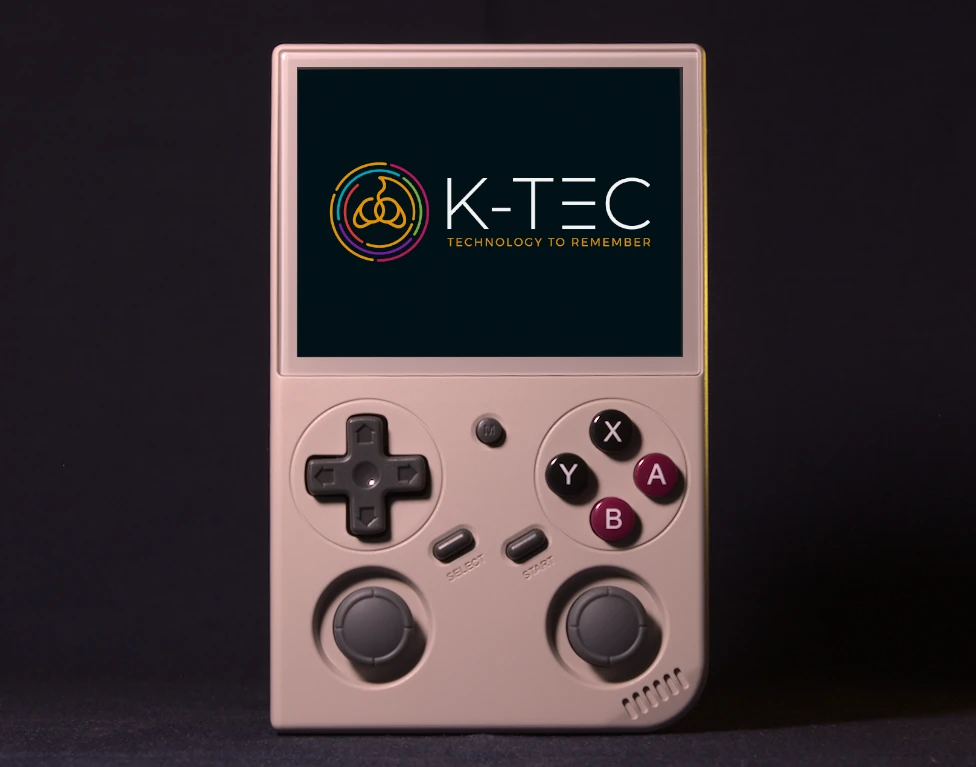
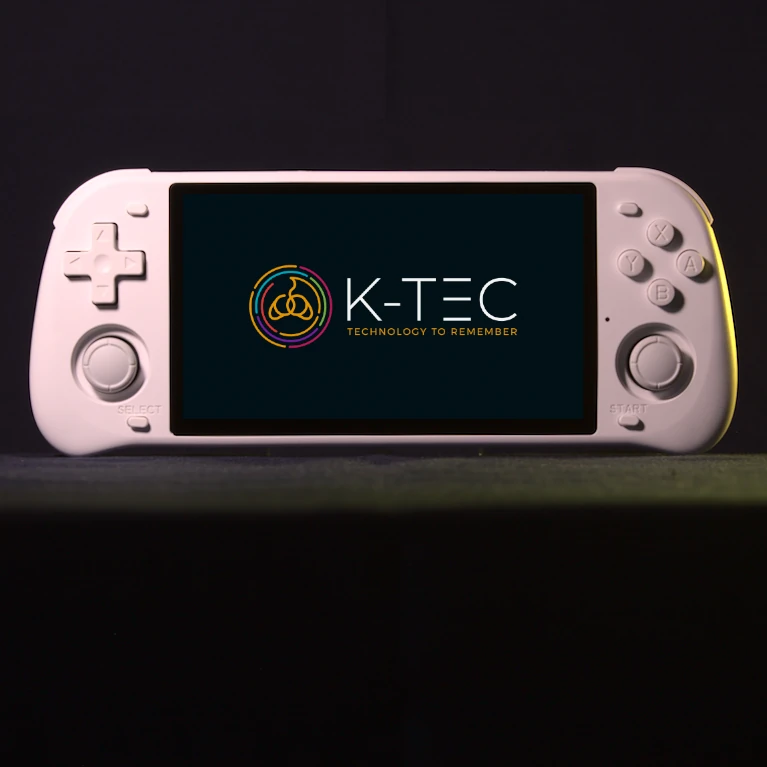
The PowKiddy RGB10 MAX 2 is the handheld I reach for when I want to settle in for a long session. A 5-inch 16:9 widescreen panel sits at the centre of it — bright, laminated, genuinely vibrant every time I test one — and the body around it is shaped for the hands, with curved grips and a proper stack of shoulder buttons. It is not the most powerful device in the K-TEC lineup; it is the most comfortable. I will be straight with you: this is the last RGB10 MAX 2 I have. The all-white Ice Special Edition is the final one remaining, and once it sells, this model retires.

This is the K-TEC Edition. The hardware is PowKiddy’s; the experience is mine. A factory RGB10 MAX 2 arrives running PowKiddy’s stock firmware — and it is poor. So the first thing I do is replace it: I install the community-favourite RetroOZ, the Linux custom firmware purpose-built for this device, in its place. From there, my work is the configuration — every system set up, every emulator tuned for this device, every screen mode balanced so the widescreen panel is used well rather than just stretched.
The work you do not see
A factory RGB10 MAX 2 arrives running PowKiddy’s stock firmware — poorly configured and unoptimized. My work begins by replacing it with RetroOZ, the community-favourite Linux firmware, and then the hours of tuning that turn a capable piece of hardware into something that simply works.
- Every system configured for this device — each emulator set up, balanced, and tested so games run the way they should on the RK3326 chip.
- PSP tuned to native PSP resolution — the widescreen panel makes this the natural fit, running through PPSSPP-GO with frame-skipping handled so the device plays within its means.
- Nintendo DS through DraStic standalone — a genuine widescreen benefit: there is room to place both screens sensibly side by side rather than stack them.
- Original aspect ratios preserved, never stretched. This is a deliberate choice and an honest one. 4:3 systems — SNES, Mega Drive — display with black bars down each side of the widescreen panel, because that is the shape they were designed in. The trade for the bigger, brighter screen is that older systems do not fill it edge to edge. I would rather show the game correctly than distort it.
- WiFi built in — so RetroAchievements are available without any extra hardware.
This is the invisible work — the configuring, testing and refinement — that the device needs before it earns a place on the shelf.
Hardware and feel

- 5.0-inch IPS screen with OCA lamination — 854 × 480 in a 16:9 widescreen ratio. Vibrant, with good viewing angles; the panel that strikes me every time I test one.
- Ergonomic curved grips — the body is shaped to sit in the hands for a long session, not just to look compact. This is the most comfortable K-TEC handheld for extended play.
- Stacked shoulder buttons — L1/L2 on the left, R1/R2 on the right — the console-controller arrangement the systems this device plays were designed around.
- 4,200 mAh battery — around six hours of play.
- Built-in WiFi for RetroAchievements.
- Rockchip RK3326 (quad-core, 1.5 GHz), 1 GB DDR3 RAM.
What it plays well, and where it reaches its limit
I will be straight with you about performance, because overselling a chip helps nobody. The RK3326 with 1 GB of RAM is a capable, honest device — but it has a ceiling.
- Plays at its best: PlayStation 1, SNES, SEGA Mega Drive, Game Boy Advance, NES, and everything older. This is the heart of what the RGB10 MAX 2 is for.
- Plays well: Sony PSP (tuned to native resolution, widescreen-configured) and Nintendo DS (DraStic standalone, where the widescreen panel helps). Both benefit from the 16:9 screen.
- Pushes the device: SEGA Dreamcast (widescreen-configured) and Nintendo 64. These run, with my tuning getting the best the chip delivers, but they sit at the edge of what the RK3326 can do.
- Not capable of: PlayStation 2, Nintendo GameCube and anything newer. The RK3326 with 1 GB of RAM is not built for that generation.
Supported systems
Your K-TEC Edition RGB10 MAX 2 arrives pre-configured across a broad sweep of gaming history:
- Home consoles: PlayStation 1, Nintendo 64, SEGA Dreamcast, SNES, SEGA Mega Drive, NES.
- Handhelds: Game Boy Advance, Nintendo DS, Sony PSP.
- Computers: Amiga, Commodore 64, ZX Spectrum.
- And dozens of arcade and classic systems — every platform pre-configured and ready to play.
Brand-name storage, backed for the life of the device

This is where I refuse to cut the corner that catches people out. Cheap handhelds arrive with no-name SD cards that corrupt within weeks — and take your save files with them.
Every RGB10 MAX 2 from K-TEC ships with a 128 GB brand-name games card (Kioxia). I am confident enough in these cards to back them with my Lifetime SD Card Guarantee — covered for the life of the device. If a card fails, I replace it.
A note on charging
Keep the charging voltage at 5V. A 5V / 1 A or 5V / 2 A charger with a USB-A to USB-C cable is the safe, simple choice. What to avoid are USB-C to USB-C fast chargers — the kind that come with modern phones and MacBooks — because they negotiate higher voltages that can damage the battery regulation circuit on this device.
What others say
“The screen was much bigger, the controls were easier to hold, everything about it made sense… I have had many hours of fun with this handheld and the best part is, I am reliving my childhood over and over again. Thanks again Michael for your exemplary customer service. Recommending your services is done without hesitation.” — David, Greater Manchester, on his Ice Special Edition RGB10 MAX 2
David researched carefully — comparing the RGB20S, Anbernic and others — and chose the RGB10 MAX 2 because the screen was bigger and the controls were easier to hold. The variant he reviewed is the same all-white Ice Special Edition that is now the last one remaining.
Find your fit
- After more raw power? The Retroid Pocket 3+ is also a widescreen handheld, and the more powerful of the two — its T618 chip reaches GameCube, Wii and PS2. The RGB10 MAX 2’s strength is comfort, character and the Linux RetroOZ setup, not the top of the performance range.
- Already own one? The RGB10 MAX 2 user guide walks through the controls and settings.
Why K-TEC? Because “Just Works” Matters.
Plenty of sellers will post you the same handheld — UK shops, marketplace resellers, overseas importers. The hardware is often identical. What differs is everything around it, and that is the part that decides whether the device plays the way it should on day one or becomes a project.
The firmware: dArkOS, ArkOS, GammaOS, or RetroOZ. Every device I sell is re-flashed with community-vetted custom firmware, chosen for the chipset inside, then hand-tuned and tested per device. That is hours of firmware flashing, card swapping and configuration before a handheld plays the way it should: the per-device tuning and emulator configuration a factory shipment typically lacks. Displays are checked and calibrated individually too — aspect ratios, scaling and shaders set per system.
The storage. The cards bundled with imported devices are usually unbranded, with no published endurance specifications — widely reported as a leading cause of data loss, and a known weak point of buying this way. A bundled card may corrupt within weeks, and when it does, the save files go with it. I use branded cards — SanDisk, Samsung, Kioxia — and back them with a Lifetime SD Card Guarantee: if a card I supplied fails, I replace it.
The delivery. An overseas order typically means three to five weeks from China by standard shipping — though some sellers ship from UK warehouses in days, so it varies by seller and stock location. Orders over £135 also attract import VAT plus a carrier handling fee on delivery (£8 Royal Mail, £12 Parcelforce). Order from K-TEC and your handheld ships free by Royal Mail Tracked 48 from the UK, arriving in two to three working days, with nothing to pay at the door.
The support and the guarantee. If an overseas order goes wrong, your recourse is a dispute process in a marketplace app, and warranty claims across borders can be slow and hard to enforce. Buy from K-TEC and you deal with a real person in the UK — the person who configured your actual device. Every handheld carries a one-year hardware warranty plus a lifetime microSD card guarantee, from a UK-registered company.
The work is already done. Skip the Setup. Start the Game.
Technical specifications
| Feature | Specification |
|---|---|
| Processor (CPU) | Rockchip RK3326, quad-core @ 1.5 GHz |
| RAM | 1 GB DDR3 |
| Storage | 128 GB brand-name games card (Kioxia) |
| Display | 5.0-inch IPS, OCA lamination, 854 × 480, 16:9 widescreen |
| Operating system | RetroOZ (Linux custom firmware, purpose-built for the RGB10 MAX 2) — installed by K-TEC in place of PowKiddy’s stock firmware, then fully configured |
| Controls | Ergonomic curved grips, stacked L1/L2 and R1/R2 shoulder buttons, D-pad, face buttons |
| Connectivity | Wi-Fi (RetroAchievements), 3.5mm audio jack, USB-C |
| Weight | 228 g |
| Dimensions | 19.7 × 8 × 2.8 cm |
| Battery | 4,200 mAh Li-polymer (~6 hours of play) |
Available option
- Colour: Ice Special Edition (all-white) — the only variant still available. Black, Stealth Special Edition and White have all sold through. When this last Ice Special Edition unit is gone, the RGB10 MAX 2 is retired.
- Storage: Expanded Edition (128 GB brand-name games card).
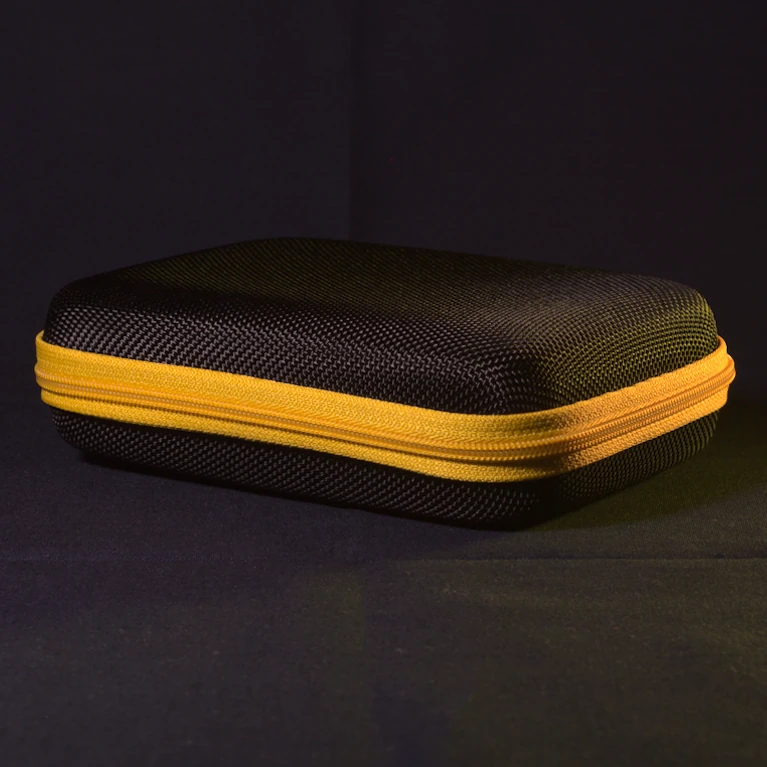
- Included accessory: Hardshell travel case (a £15.90 case, made to fit the device) — included free with this final unit.