
TL;DR — the picks
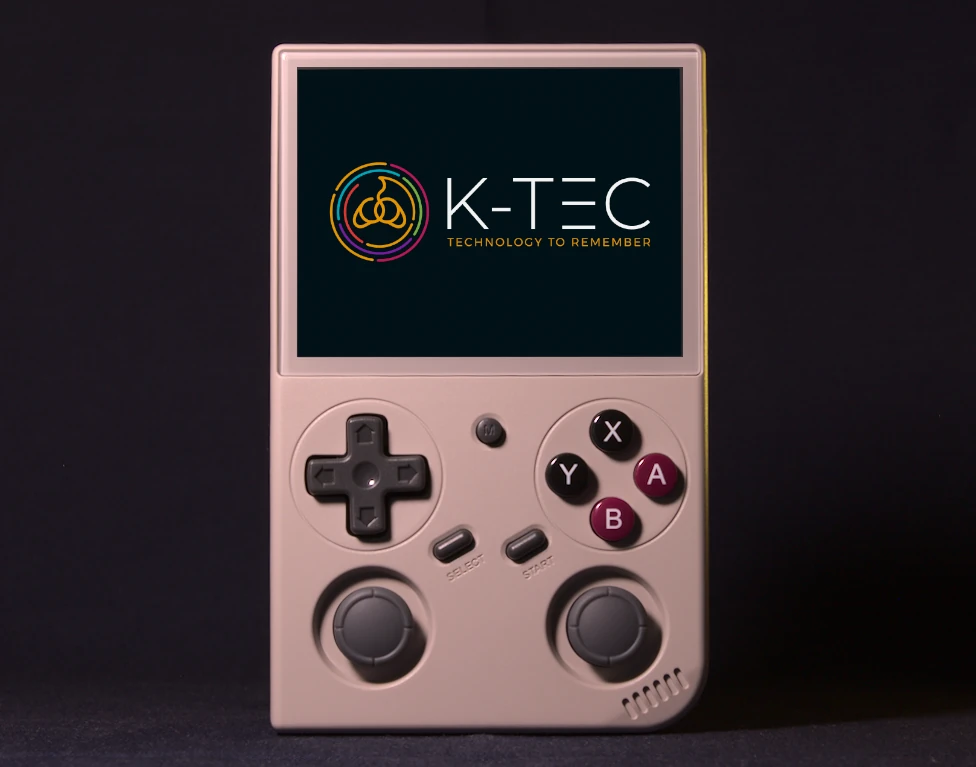
- Best value for GBA — perfect screen fit at the lowest price: BATLEXP G350 — from £94.90, a 3.5″ 4:3 panel that suits the GBA’s 3:2 picture, and a chip that runs the full GBA library with room to spare.
- Best vertical handheld that goes further than GBA: Anbernic RG353V — £149.90, the same 3.5″ 4:3 screen, but the headroom to run N64, Dreamcast and PSP at full speed too.
- Premium 4:3 build: Anbernic RG353M — £184.90, that same screen in an aluminium body.
- Largest 4:3 screen and the most reach: Anbernic RG405M — £199.90, the biggest correct-aspect GBA image I sell, on a chip that takes you well past GBA.
Every device here is dispatched from the UK. Prices are correct on the day this was written.
What actually makes a good Game Boy Advance handheld
This is the platform in the series where the answer is the most counter-intuitive, because the GBA is the easiest thing any of these devices do. The decision that matters is not the chip. It is the screen.
Power is not the differentiator here. The GBA’s native resolution is a modest 240×160, and every chip I sell — from the budget RockChip RK3326 in the G350 up to the UNISOC T618 in the RG405M and the Retroid Pocket 3+ — runs the full GBA library at full speed without breaking a sweat. This is the opposite of the PS1 or the Nintendo DS, where the processor is the thing that separates a device that runs the library from one that struggles with it. For the GBA, that question is already answered before you start. So spending more does not buy you a better GBA — it buys you other things.
Screen shape is the differentiator. The GBA draws a 3:2 picture. A 4:3 panel — which is what the G350, the RG353V, the RG353M, the RG405M and the RG DS all use — is the closest fit in the range, so a GBA game fills that screen with only thin black bars top and bottom. The widescreen 16:9 panel on the Retroid Pocket 3+ is a different story: because 16:9 is far wider than the GBA’s 3:2, the image pillarboxes into a narrow vertical strip with large black bars down either side. The wider screen that is the best fit for PSP and Dreamcast, and was the best fit for the Nintendo DS’s side-by-side layout, is the worst fit for the GBA. If you are buying for the GBA specifically, this is the single fact that should steer you towards a 4:3 device.
Form factor is a matter of taste, not correctness. The original Game Boy Advance was a landscape handheld — directional pad on the left, face buttons on the right, two shoulder buttons along the top — and the Game Boy Advance SP folded into a clamshell. Both shapes live on in the range: the landscape slabs (G350, RG353M, RG405M) and the RG DS clamshell each echo a real piece of GBA hardware. Every one of them plays the GBA comfortably, with a proper directional pad, face buttons and the two shoulder buttons the GBA library relies on. The choice between them is how it feels in your hands, not whether it runs the games.
The emulator still has to be configured. GBA emulation is mature, and the standard core (mGBA) runs on both the Linux and Android firmwares I install — but getting it right still means setting the aspect ratio and scaling so the picture fills the panel correctly, mapping the controller so the shoulder buttons land where the GBA expects them, and testing the save behaviour. A GBA game that boots and a GBA game that plays the way you remember are, once again, two different things.
The picks in detail
Best value for GBA — perfect screen fit at the lowest price: BATLEXP G350 (from £94.90)
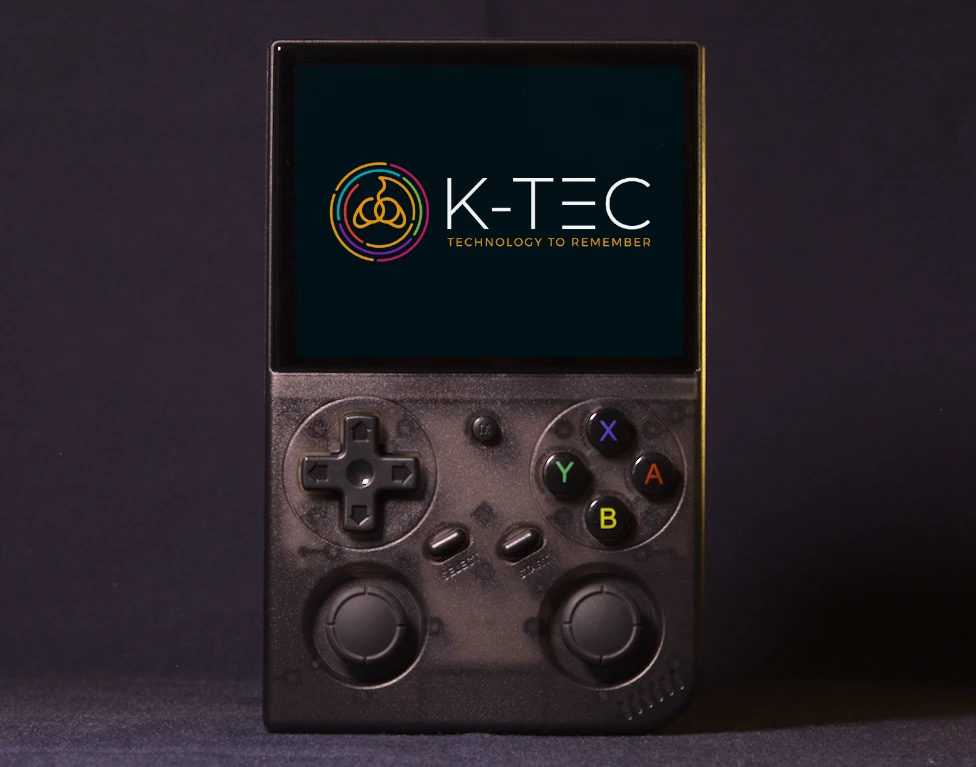
If the Game Boy Advance is the main reason you are buying, this is the smart spend, and it is not a close call on value. The G350 has a 3.5″ 4:3 IPS panel at 640×480 — the same display as the RG353M — and the GBA’s 3:2 picture suits it almost perfectly, filling the screen with only thin letterbox bars.
Its RockChip RK3326 chip is the lightest in the range, and that is worth being straight about: it tops out at the lighter end of the library, with partial performance on the heaviest PSP, Dreamcast, N64 and Nintendo DS titles. But the GBA sits comfortably inside its strengths, not at the edge of them. The G350 runs SNES and PS1 excellently, and the GBA is a lighter ask than either of those. So for a buyer whose nostalgia lives in the Game Boy Advance, this device gives you the right screen at the lowest price I sell, and it is not working hard to do it.
It runs the replacement dArkOS firmware I install (a Debian-based successor to ArkOS, not the factory stock), has no touchscreen — which the GBA never had, so nothing is lost there — and ships with a brand-name SD card under my Lifetime SD Card Guarantee.
- 3.5″ 4:3 IPS screen, 640×480 (matches the GBA’s 3:2 closely)
- RockChip RK3326 — full GBA library, with SNES and PS1 comfortably too
- Replacement dArkOS firmware (not stock)
- See the BATLEXP G350
Best vertical handheld that goes further than GBA — Anbernic RG353V (£149.90)
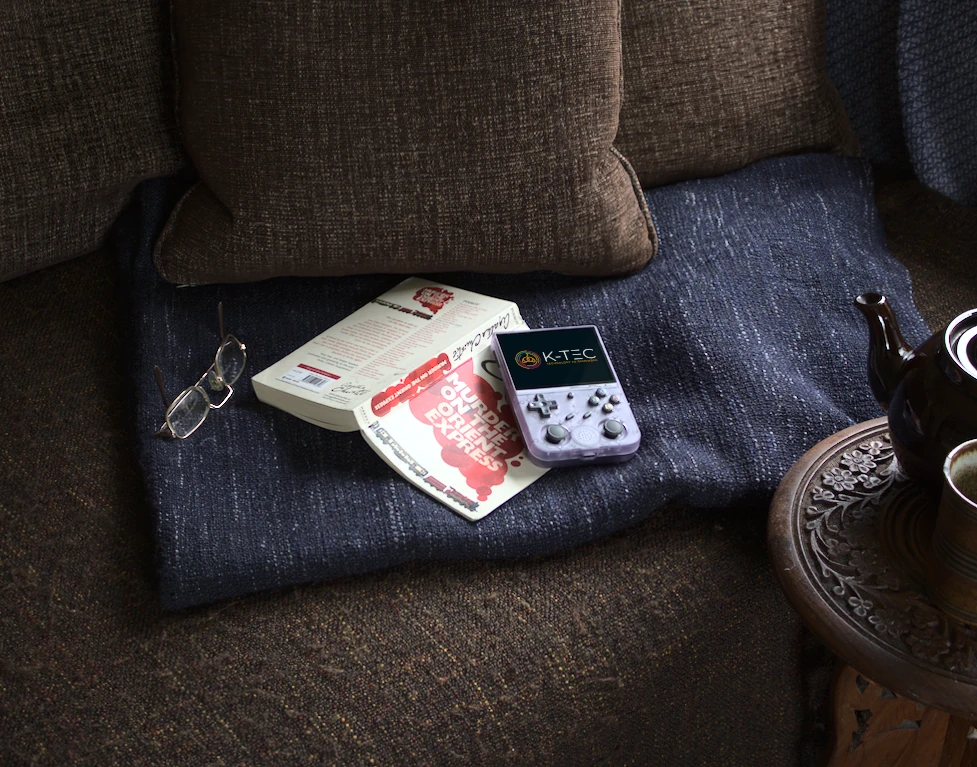
If the GBA is one of several systems you want and you like the vertical, Game Boy-style shape, this is the pick. The RG353V uses the same 3.5″ 4:3 panel as the G350, so the GBA fits it just as well — but its RockChip RK3566 chip takes you well past the GBA into N64, Dreamcast and PSP at full speed, with the Nintendo DS playable on its single screen.
It is the device I sell with the widest choice of custom firmware, and I ship it dual-boot: ArkOS (Linux) and GammaOS-RK3566 (Android), each configured in its own right. For a buyer who wants the GBA and a great deal more besides, on a panel that suits it, this is where the value sits above the G350.
- 3.5″ 4:3 IPS screen, 640×480, multi-touch
- RockChip RK3566 — full GBA plus N64, Dreamcast and PSP
- Dual-boot ArkOS + GammaOS-RK3566
- See the Anbernic RG353V
Premium 4:3 build — Anbernic RG353M (£184.90)
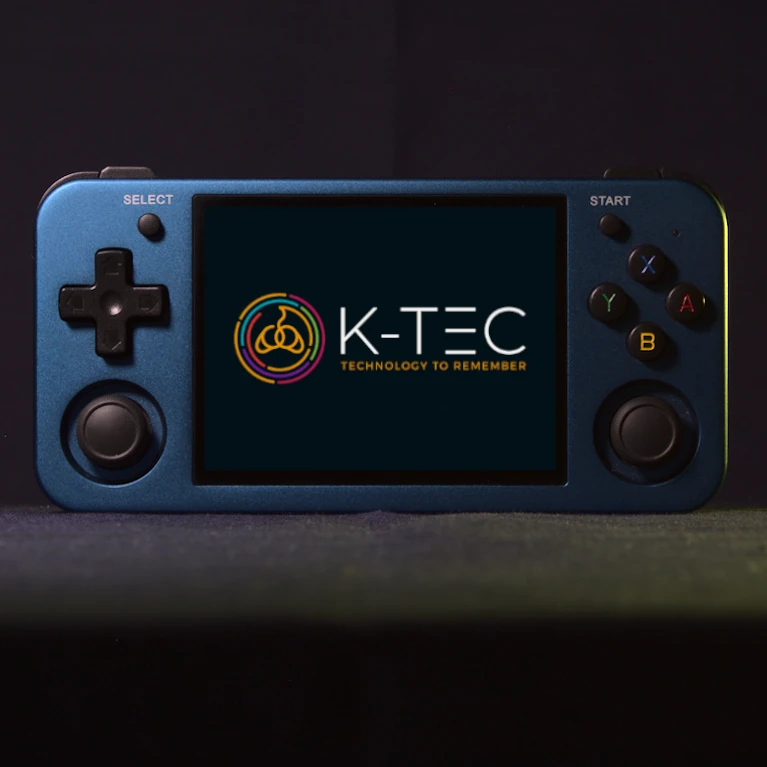
The RG353M is the RG353V’s metal-bodied sibling. It shares the same RK3566 internals and the same 3.5″ 4:3 screen, so the GBA experience is identical — the difference is build and feel. The aluminium shell give it a more substantial, more finished feel in the hand. If you like the landscape shape and want the premium version, this is the one.
- 3.5″ 4:3 IPS screen, 640×480, 228 PPI, multi-touch
- RockChip RK3566 — same GBA performance and reach as the RG353V
- Aluminium body, dual-boot ArkOS + GammaOS-RK3566
- See the Anbernic RG353M
Largest 4:3 screen and the most reach — Anbernic RG405M (£199.90)
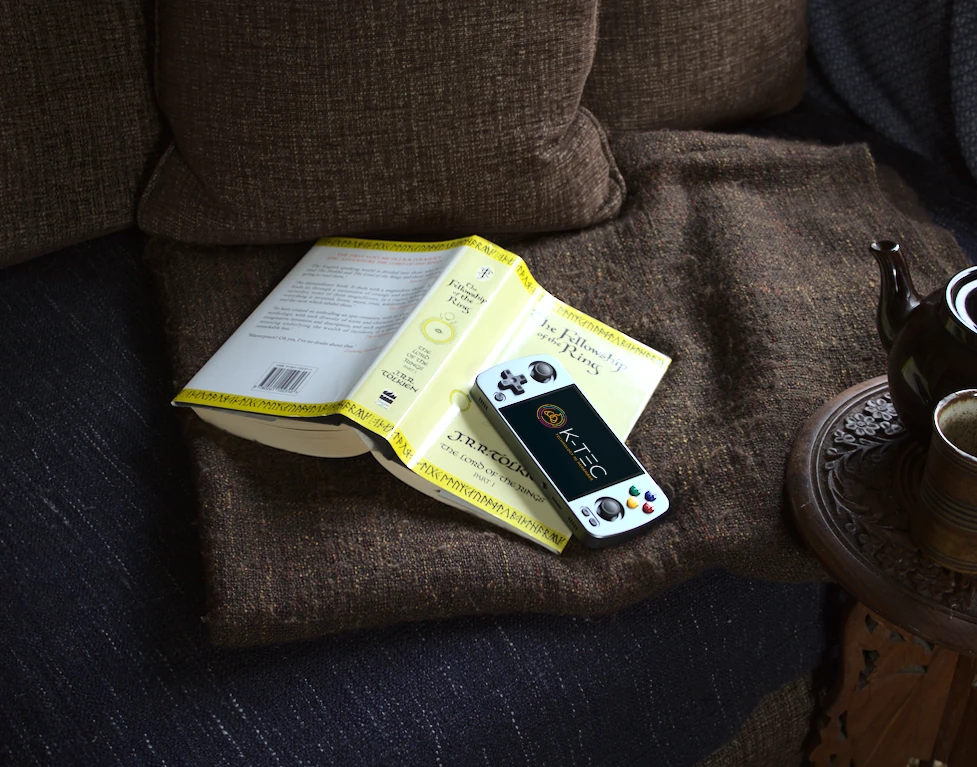
If you want the biggest correct-aspect GBA image I sell, this is it. The RG405M has a 4.0″ 4:3 panel — the largest 4:3 screen in the range — so a GBA game fills more of your view than on the 3.5″ devices, still with only those thin letterbox bars.
I will be honest about the trade-off, because for the GBA specifically this is more device than the platform asks for. Its UNISOC T618 chip (a different family from the RockChip devices — not an RK3566) runs the GBA effortlessly, but the GBA does not need that power; what you are paying for is the headroom to go a long way past it, into PS1 with wobble correction and double-resolution rendering, N64, and onward towards PS2, GameCube and Wii. So this is the pick when the GBA is one system among many, you want the largest screen that fits it properly, and you want the device that reaches furthest beyond it.
- 4.0″ 4:3 IPS screen, 640×480 (largest 4:3 panel in the range)
- UNISOC T618 — full GBA plus the reach into PS1, N64 and beyond
- Replacement GammaOS Lite firmware with Daijishou frontend
- See the Anbernic RG405M
What about the Retroid Pocket 3 Plus and the RG DS?
The Retroid Pocket 3 Plus (£214.90) is the best screen I sell for PSP, Dreamcast and the Nintendo DS, and the most expensive device here — but it is the worst screen fit for the GBA. Its 4.7″ 16:9 panel is far wider than the GBA’s 3:2, so a GBA game pillarboxes into a narrow strip in the centre with large black bars down both sides. The same T618 chip that runs the GBA flawlessly on the RG405M runs it just as well here; the difference is purely that the wide screen fights the GBA’s shape rather than fitting it. If the GBA is your focus, the RP3+ is not the device for it — buy it for the widescreen systems it suits, and pick a 4:3 device for the GBA.
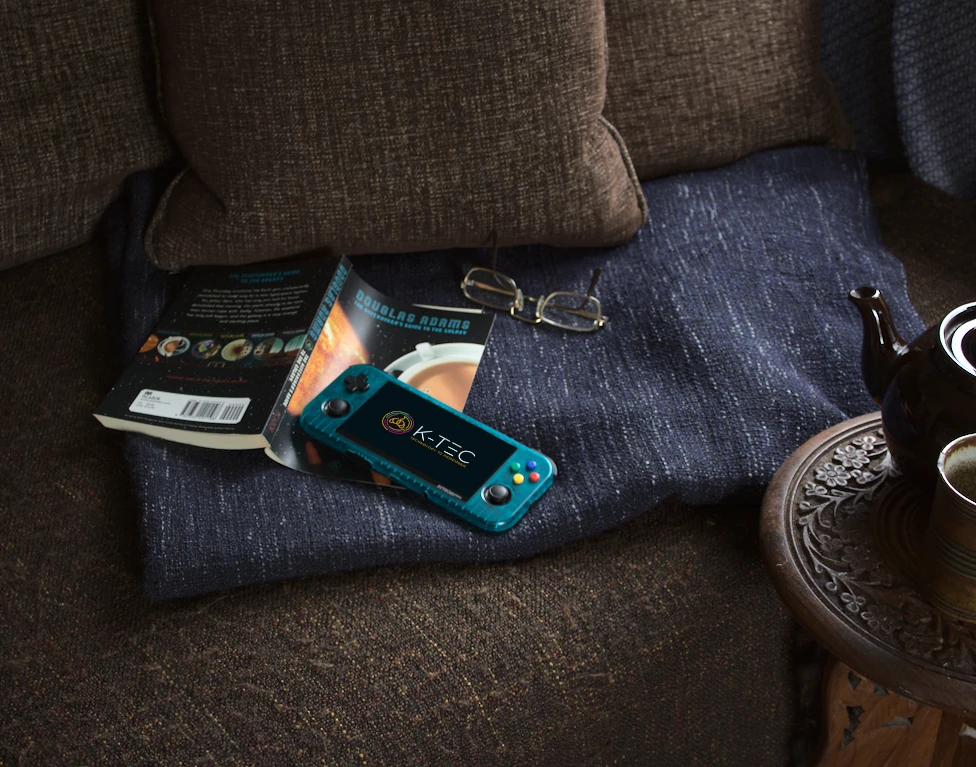
The Anbernic RG DS (£144.90) runs the GBA perfectly on its 4.0″ 4:3 top screen (the bottom screen sits idle), so it is a fine GBA handheld — but you are paying for the dual-screen and touch hardware that exists for the Nintendo DS, and the GBA does not use any of it. The RG DS is the device to buy if the DS is your priority; for the GBA alone, a single-screen 4:3 device does the same job for the same money or less.
How to choose
- The GBA is the reason you are buying, and you want the lowest price: G350. The right screen, the right chip for the job, the smallest price tag.
- You want the GBA and a great deal more, in a vertical shape: RG353V. Same screen, far more reach.
- You want that same screen in a premium metal build: RG353M.
- You want the largest screen that fits the GBA properly, and the most reach past it: RG405M.
- You are tempted by the Retroid Pocket 3+: buy it for PSP and Dreamcast, not the GBA — its wide screen is the wrong shape for the GBA’s picture.
Why a configured handheld plays the GBA better than a factory one
Every device on this page has had the factory SD card removed and replaced with a brand-name card from SanDisk, Samsung or Kioxia, and every one is covered by my Lifetime SD Card Guarantee — if the card fails or its data corrupts, for the life of the device I replace the card or restore it. A failed card is the single most common way a retro handheld dies, and it takes your saves with it. I wrote about exactly why that happens, and how I remove the risk, in Why Do Retro Handheld SD Cards Keep Failing?.
Beyond the card, each device has the per-platform tuning described above applied before it leaves me — the aspect ratio and scaling so the GBA picture fills the panel correctly, the controller mapping so the shoulder buttons land where they should, and the save testing across the library — rather than the factory stock firmware and unconfigured emulator a direct import arrives with. That is the difference between a device that boots a GBA game and one that plays it properly. The full picture of what changes between a factory handheld and one of mine is on The K-TEC Difference.
The short version
Because every device I sell runs the Game Boy Advance at full speed, the choice comes down to the screen, not the chip — and a 4:3 panel fits the GBA’s 3:2 picture far better than a widescreen one. For most people buying for the GBA, the answer is the G350, which gives you that 4:3 screen at the lowest price I sell. The RG353V is the value pick if you want more than the GBA, the RG353M is the premium version of that, and the RG405M is the choice for the largest 4:3 screen and the most reach beyond the GBA. The Retroid Pocket 3+ is the wrong screen for the GBA despite being the best for much else. If you are unsure which fits you, contact me and I will point you at the right one.
Leave a Reply