

TL;DR — the picks
- Best Dreamcast handheld I sell — final stock: Anbernic RG353V — £164.90, the right 3.5″ 4:3 screen fit, a RockChip RK3566 chip that runs the Dreamcast library well — the majority of titles with the right tuning — and the Flycast emulator configured to get it there. With the RG405M now retired it is the strongest Dreamcast device I can still sell you — though I am not restocking it.
- Premium 4:3 build — final stock: Anbernic RG353M — £184.90, that same RK3566 Dreamcast performance in an aluminium body. Only one remains.
- The dual-screen wildcard (partial): Anbernic RG DS — £147.90, a 4.0″ 4:3 top screen that fits the Dreamcast well, but the DS-purpose-built hardware only runs the library partially.
- The former top pick, now retired: the Anbernic RG405M — the 4.0″ 4:3, UNISOC T618 device this guide originally crowned — has sold through for good, with no restock coming. The closest devices in spirit are the RG353M and RG353V: same 4:3 screen shape, but smaller panels (3.5″ rather than 4.0″) and a less powerful chip. The honest trade-off is set out below.
Every device here is dispatched from the UK. Prices are correct on the day this was written.
What actually makes a good Dreamcast handheld
Of the platforms in this series, the Dreamcast is where the most things have to line up at once. For the Game Boy Advance the screen was the whole story; for the PS1 the chip did most of the work. The Dreamcast asks for both, plus a third thing the older platforms never did: the right emulator, configured correctly. So three decisions matter, not one.
Power is the first hurdle, and not every chip clears it. The Dreamcast is a 3D console from 1998, and its library is genuinely demanding to emulate. The UNISOC T618 — the chip that powered the RG405M and the Retroid Pocket 3 Plus, both of which have now sold through for good — runs the full library at full speed; that is comfortably inside what that chip does. The RockChip RK3566 in the RG353V and RG353M runs the library well, around the majority of titles, with the right tuning. The RockChip RK3326 in the BATLEXP G350 only manages it partially, and I would not point a Dreamcast-first buyer there. This is the opposite of the Game Boy Advance, where every chip I sell runs the whole library — here, the cheapest chip genuinely struggles, and that is worth knowing before you spend.
Screen shape is the second decision, and for the Dreamcast a 4:3 panel is the correct fit. The Dreamcast’s native resolution is 640×480, a 4:3 picture — so a 4:3 panel fills the screen cleanly, edge to edge, with no wasted space. That is what the RG405M, the RG353V, the RG353M, the RG DS and the G350 all use. The Retroid Pocket 3 Plus is the exception: its 4.7″ 16:9 widescreen panel is wider than the Dreamcast’s 4:3 image, so a Dreamcast game pillarboxes into the centre with black bars down both sides. The wide screen that is the perfect fit for the PSP is the wrong shape for the Dreamcast. If you are buying for the Dreamcast specifically, this points you firmly towards a 4:3 device.
The emulator is the third decision, and it is the one most buyers never see. There are two good Dreamcast emulators, and they suit different hardware. ReDream is a standalone emulator that runs best on the more powerful T618 chips — that is what I install on the RG405M and the Retroid Pocket 3 Plus. Flycast is the RetroArch core that suits the lighter RockChip devices, and on the RK3566 it runs noticeably better on the Linux firmware (ArkOS) than on the Android side, with a small processor under-clock applied to smooth out the heavier titles. Getting the right emulator onto the right chip, and then tuning it per device, is real work — and it is the difference between a Dreamcast game that plays and one that stutters. This is also where a configured handheld pulls away from a factory one: a direct import arrives with the default emulator at default settings, and on a demanding platform like the Dreamcast that shows.
Form factor is a matter of taste, not correctness. Every landscape device here has the controls the Dreamcast library expects — a directional pad, analogue stick, face buttons and shoulder triggers — and plays it comfortably. The RG DS clamshell has them too, on a 4.0″ 4:3 top screen, though its dual-screen and touch hardware exists for the Nintendo DS and the Dreamcast does not use any of it.
The picks in detail
Best Dreamcast handheld I sell — Anbernic RG353V (£164.90, final stock)
With the RG405M retired, this is where the crown lands, and it earns it honestly: the right screen, tuned performance, and the emulator matched to the chip. The RG353V has a 3.5″ 4:3 panel — the same correct aspect ratio the Dreamcast asks for — so the picture fills it cleanly, edge to edge. Its RockChip RK3566 chip runs the library well, the majority of titles at full speed, with the tuning I apply: the Flycast core with a processor under-clock on the heavier games, running best on the Linux side of its dual-boot setup.
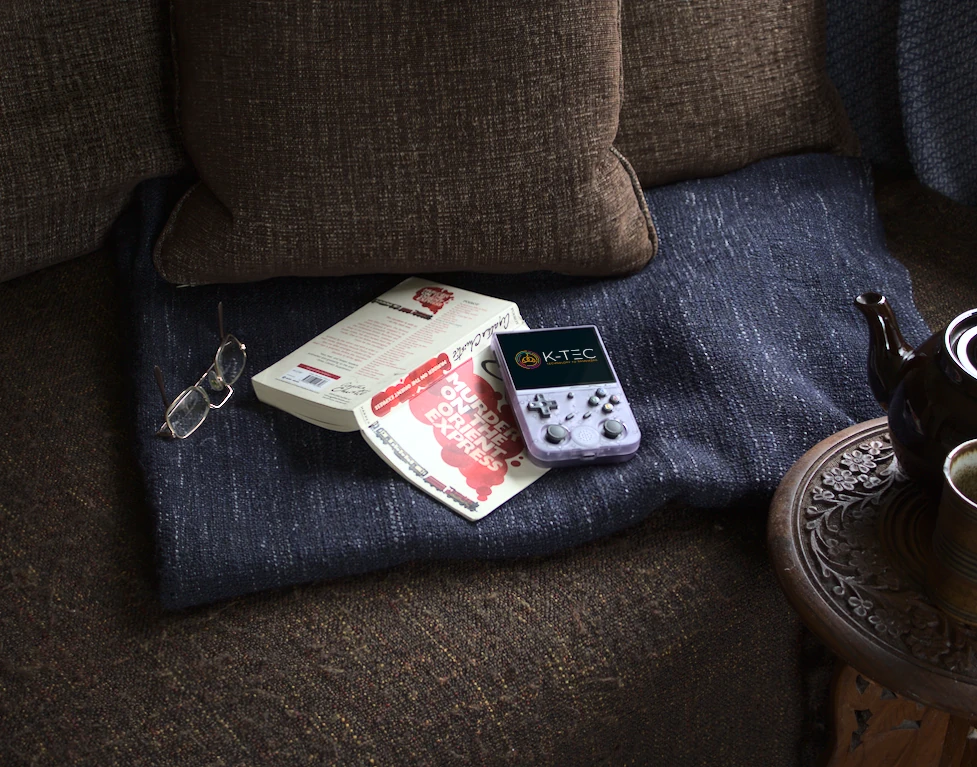
It is the device I sell with the widest choice of custom firmware, and I ship it dual-boot: ArkOS (Linux) and GammaOS-RK3566 (Android), each configured in its own right. For a Dreamcast buyer who wants the right screen and solid performance at a lower price, this is the one I would point most people to. I will be straight that I am not restocking the RG353V, so this is final stock — if it is the one you want, it is worth acting on.
- 3.5″ 4:3 IPS screen, 640×480, multi-touch (Dreamcast fills it cleanly)
- RockChip RK3566 — Dreamcast runs well with tuning (Flycast, best on ArkOS)
- Dual-boot ArkOS + GammaOS-RK3566
- See the Anbernic RG353V
Premium 4:3 build — Anbernic RG353M (£184.90)
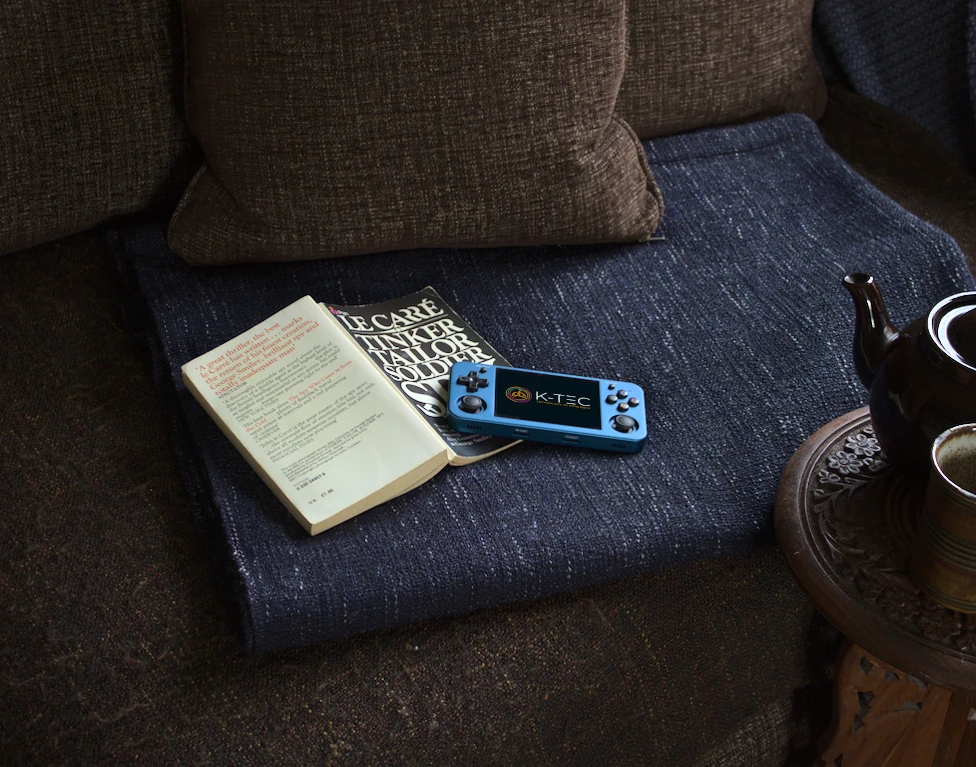
The RG353M is the RG353V’s metal-bodied sibling. It shares the same RK3566 internals and the same 3.5″ 4:3 screen, so the Dreamcast experience is identical — the difference is build and feel. The aluminium shell gives it a more substantial, more finished feel in the hand. If you like the landscape shape and want the premium version of the RK3566 Dreamcast experience, this is the one.
- 3.5″ 4:3 IPS screen, 640×480, 228 PPI, multi-touch
- RockChip RK3566 — same Dreamcast performance as the RG353V
- Aluminium body, dual-boot ArkOS + GammaOS-RK3566
- See the Anbernic RG353M
Now retired — the Anbernic RG405M
This guide originally crowned the RG405M as the best Dreamcast handheld I sold, and it earned it: a 4.0″ 4:3 panel — the largest 4:3 screen in the range — a UNISOC T618 chip that runs the full Dreamcast library at full speed, and the standalone ReDream emulator on its GammaOS Lite firmware. That device has now sold through for good; I am not restocking it, and it is no longer available from me.
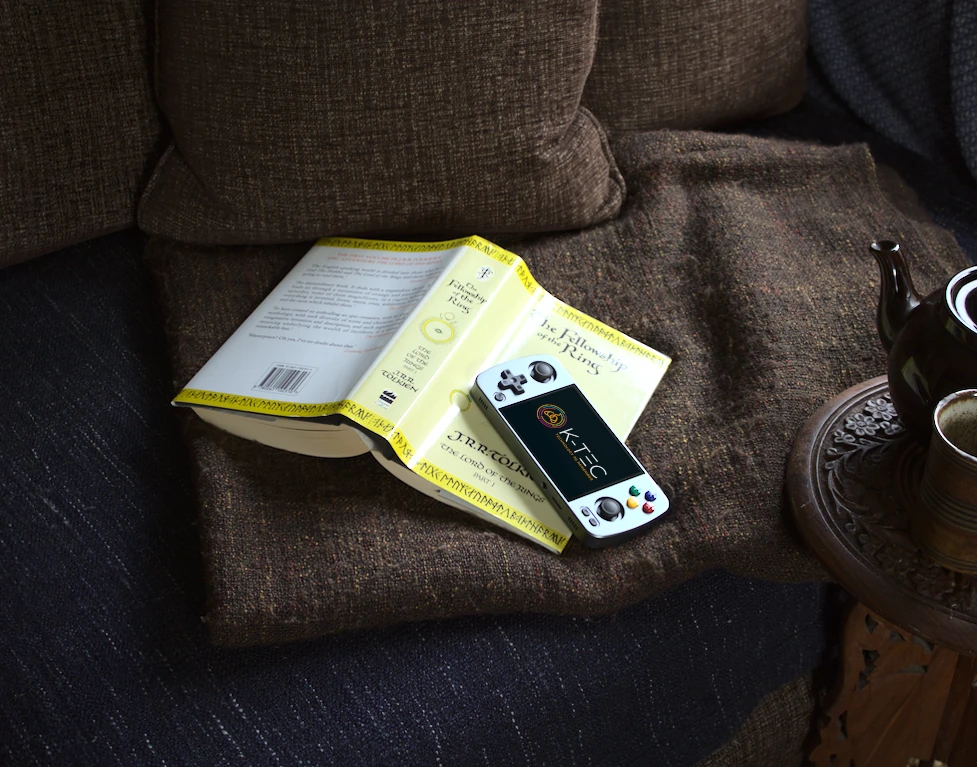
If you came here for the RG405M, the closest devices in spirit are the RG353M and the RG353V — and I want to be honest about the trade-off rather than call them equivalents. Both share the same 4:3 screen shape, so the Dreamcast picture fills the panel the same way, but the screens are smaller: 3.5″ rather than 4.0″. And both run the RockChip RK3566 rather than the T618 — the library runs well, the majority of titles with the right tuning, but it is not the full-library-at-full-speed guarantee the T618 carried, and the headroom past the Dreamcast into the more demanding platforms is not there. What you still get is the right screen shape, a tuned Flycast set-up that plays rather than stutters, and a device I stand behind. If you already own an RG405M from me, its user guide remains available.
What about the Retroid Pocket 3 Plus, the RG DS and the G350?
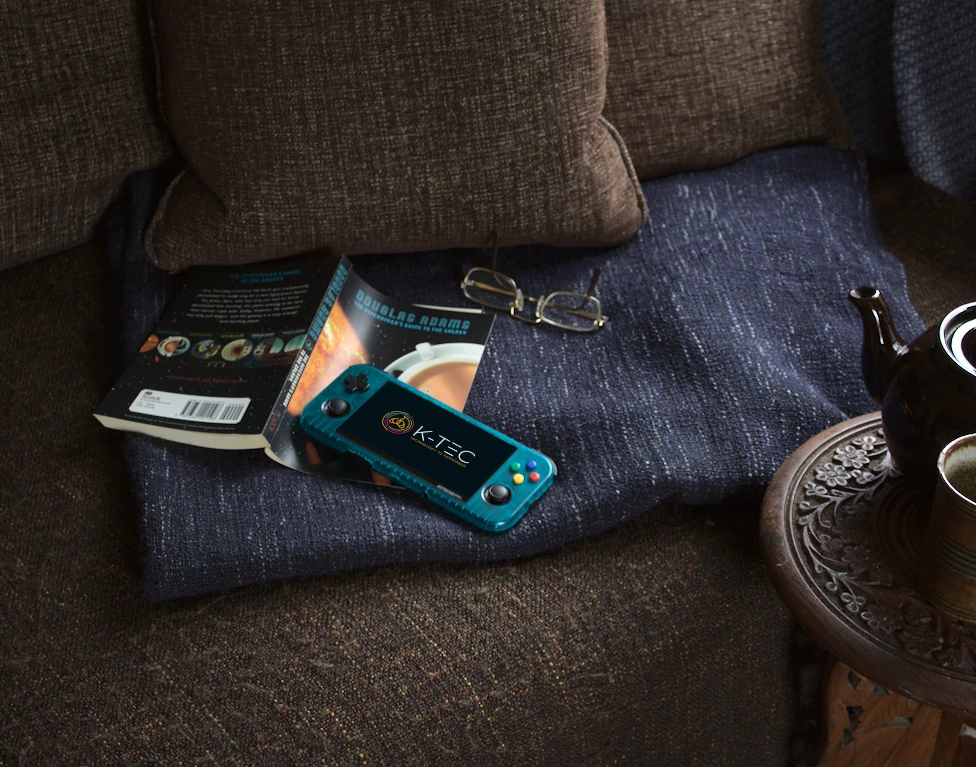
The Retroid Pocket 3 Plus has the T618 chip and the ReDream emulator that made it a powerful Dreamcast device under the hood — but its 4.7″ 16:9 widescreen panel is the wrong shape for the Dreamcast’s 4:3 picture, so a Dreamcast game pillarboxes into the centre with black bars down both sides. The same wide screen that is the ideal fit for the PSP is the one device here that fights the Dreamcast’s shape rather than fitting it. Like the RG405M, it has now sold through for good — so for a Dreamcast-first buyer it was never the best screen, and it is no longer available either.
The Anbernic RG DS (£147.90) has a 4.0″ 4:3 top screen that fits the Dreamcast well, and it runs the Dreamcast through the Flycast standalone emulator — but it only runs the library partially, with slowdowns on the more demanding titles, and the dual-screen and touch hardware it is built around exists for the Nintendo DS, which the Dreamcast does not use. The RG DS is the device to buy if the DS is your priority; for the Dreamcast it is workable but not its strength.
The BATLEXP G350 (from £94.90) is the value champion of the range, but its RockChip RK3326 chip only runs the Dreamcast partially — it is a 2D-first device, and the Dreamcast sits beyond what it does well. If the Dreamcast is your main reason for buying, the G350 is not the device for it; buy it for the Game Boy, SNES and PS1 libraries it excels at.
How to choose
- You want the best Dreamcast device I sell, and it is still available: RG353V. The right 4:3 screen, tuned RK3566 performance — the majority of the library — and the lower price. Final stock, not restocked.
- You want that same RK3566 performance in a premium metal build: RG353M. Final stock — only one remains.
- You came here for the RG405M: it has retired — sold through with no restock. The RG353M and RG353V are the closest in spirit: same 4:3 shape, but a smaller screen and a less powerful chip, as set out above.
- You are tempted by the Retroid Pocket 3 Plus: it has also sold through — and its widescreen panel was the wrong shape for the Dreamcast’s 4:3 picture anyway.
- You are drawn to the BATLEXP G350 on price: it is the wrong chip for the Dreamcast — buy it for the 2D libraries it does well.
Why a configured handheld plays the Dreamcast better than a factory one
Because the Dreamcast is demanding, the configuration work matters more here than on any 2D platform. Every device on this page has the right emulator matched to its chip — ReDream on the T618 devices, Flycast tuned on the RockChip devices — with the per-game settings, the processor under-clocks where they help, and the save handling tested across the library. A direct import arrives with the default emulator at default settings, and on the Dreamcast that is exactly where the stutter and the audio glitches live.
Beyond the software, each device has had the factory SD card removed and replaced with a brand-name card from SanDisk, Samsung or Kioxia, and every one is covered by my Lifetime SD Card Guarantee — if the card fails or its data corrupts, for the life of the device I replace the card or restore it. A failed card is the single most common way a retro handheld dies, and it takes your saves with it. I wrote about exactly why that happens, and how I remove the risk, in Why Do Retro Handheld SD Cards Keep Failing?. The full picture of what changes between a factory handheld and one of mine is on The K-TEC Difference.
The short version
Because the Dreamcast needs power, a 4:3 screen and a properly configured emulator all at once, the choice is more constrained than for the older platforms — and the RK3326 in the G350 and the 16:9 panel on the Retroid Pocket 3 Plus both fall out of the running for different reasons. Here is the honest situation: the RG405M, this guide’s original top pick, has sold through for good, and the Retroid Pocket 3 Plus has gone the same way — so the T618 tier is simply no longer on sale. The strongest Dreamcast device I can still sell you is the RG353V: the right 4:3 screen, tuned RK3566 performance, and the lower price. The RG353M is the premium version of the same experience in aluminium — and both are final stock I am not restocking, so it is worth acting while they are available. The RG DS fits the Dreamcast screen well but only runs the library partially — it is the device to buy if the DS is your priority. If you are unsure which fits you, contact me and I will point you at the right one.
Leave a Reply