

TL;DR — the picks
- Best N64 handheld I sell — final stock: Anbernic RG353V — £149.90, the right 3.5″ 4:3 screen fit, a RockChip RK3566 chip where the N64 is genuinely one of its strengths, and the Mupen64Plus emulator with the Rice renderer configured. With the RG405M now retired it is the strongest N64 device I can still sell you — though I am not restocking it.
- Premium 4:3 build — final stock: Anbernic RG353M — £184.90, that same RK3566 N64 performance in an aluminium body with Hall Effect sticks. Only a couple remain.
- The dual-screen wildcard: Anbernic RG DS — £147.90, a 4.0″ 4:3 top screen that fits the N64 well, with N64 running through the Mupen64Plus standalone emulator — though the device is purpose-built for the Nintendo DS.
- The former top pick, now retired: the Anbernic RG405M — the 4.0″ 4:3, UNISOC T618 device this guide originally crowned — has sold through for good, with no restock coming. The closest devices in spirit are the RG353M and RG353V: same 4:3 screen shape, but smaller panels (3.5″ rather than 4.0″) and a less powerful chip. The honest trade-off is set out below.
Every device here is dispatched from the UK. Prices are correct on the day this was written.
What actually makes a good N64 handheld
Like the Dreamcast before it, the Nintendo 64 is a 3D console, and a 3D console asks more of a handheld than the 2D platforms earlier in this series did. For the Game Boy Advance the screen was the whole story; for the PS1 the chip did most of the work. The N64, like the Dreamcast, needs both — plus the right emulator, set up correctly. So three decisions matter, not one.
Power is the first hurdle, and here the cheapest chip genuinely struggles. The N64 is a 3D console from 1996, and its library is real work to emulate. The UNISOC T618 — the chip that powered the RG405M and the Retroid Pocket 3 Plus, both of which have now sold through for good — runs the full N64 library at full speed. The RockChip RK3566 in the RG353V and RG353M runs the N64 well, and on those two devices the N64 is genuinely one of the platforms the chip is best at rather than a stretch. The RockChip RK3568 in the RG DS is the same Rockchip family and runs the N64 through the Mupen64Plus standalone emulator. The RockChip RK3326 in the BATLEXP G350 only manages the N64 partially — it is a 2D-first device, and the N64 sits beyond what it does well. This is the same pattern as the Dreamcast: the cheapest chip is honest about its limits, and that is worth knowing before you spend.
Screen shape is the second decision, and for the N64 a 4:3 panel is the correct fit. The N64’s native resolution is 320×240, a 4:3 picture — so a 4:3 panel fills the screen cleanly, edge to edge, with no wasted space. That is what the RG405M, the RG353V, the RG353M, the RG DS and the G350 all use. The Retroid Pocket 3 Plus is the exception: its 4.7″ 16:9 widescreen panel is wider than the N64’s 4:3 image, so an N64 game pillarboxes into the centre with black bars down both sides. The wide screen that is the perfect fit for the PSP is the wrong shape for the N64. If you are buying for the N64 specifically, this points you firmly towards a 4:3 device.
The emulator is the third decision, and it is the one most buyers never see. On the Android devices I run the N64 through Mupen64Plus, the standalone emulator — that is what sits on the RG405M and the RG DS, and on the RG353V and RG353M’s Android side. On the RK3566 devices the Rice video renderer is enabled for N64, which is the plugin that handles the N64’s graphics pipeline well on that chip. Getting the right renderer onto the right chip, and then tuning it per device, is real work — and it is the difference between an N64 game that plays and one that stutters. This is also where a configured handheld pulls away from a factory one: a direct import arrives with the default emulator at default settings, and on a 3D platform like the N64 that shows.
Form factor is a matter of taste, not correctness. Every device here has the controls the N64 library expects — an analogue stick, a directional pad, face buttons and shoulder triggers — because the N64 was the console that put the analogue stick front and centre, and every handheld in the range carries one. What differs is the shape: the RG405M and RG353M are horizontal metal bodies, the RG353V and G350 are vertical pocket-sized devices, the RG DS is a clamshell. Pick the one that feels right in your hands; none of them is wrong for the N64 on the controls.
The picks in detail
Best N64 handheld I sell — Anbernic RG353V (£149.90, final stock)
With the RG405M retired, this is where the crown lands, and it earns it honestly: the right screen, a chip the N64 genuinely suits, and a properly configured emulator. The RG353V has a 3.5″ 4:3 panel — the same correct aspect ratio the N64 asks for — so the picture fills it cleanly, edge to edge. Its RockChip RK3566 chip runs the N64 well, and on this device the N64 is one of the platforms the chip is genuinely good at, not a stretch. The Rice renderer handles the graphics, and I run the N64 through Mupen64Plus. I ship it dual-boot — ArkOS (Linux) and GammaOS-RK3566 (Android) — each configured in its own right.
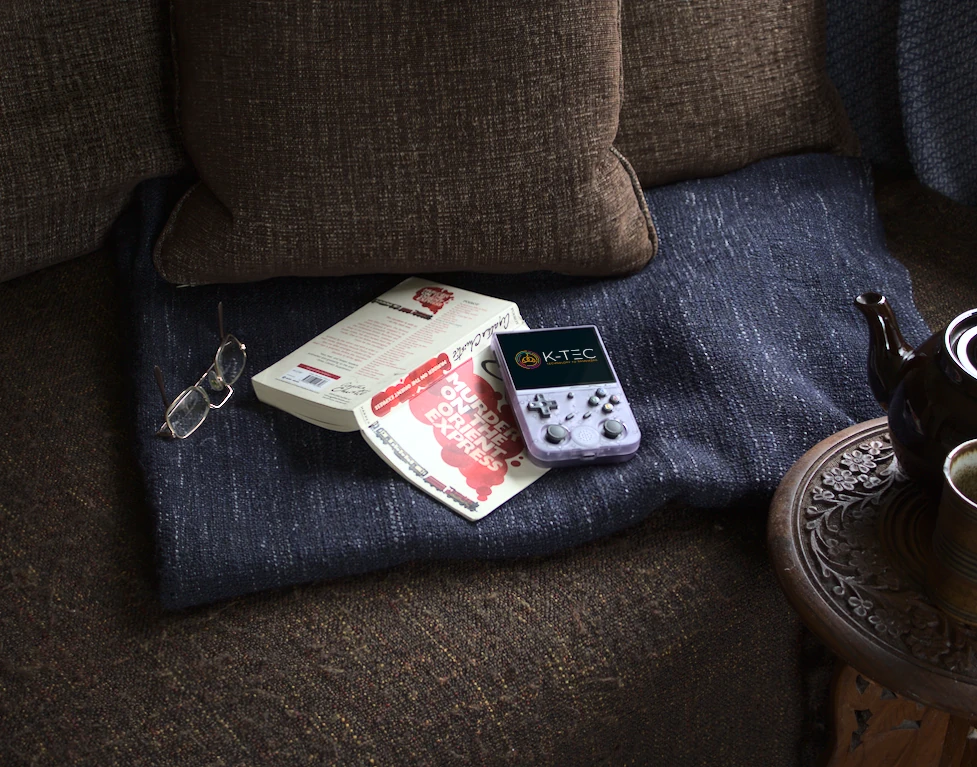
One small GammaOS quirk worth knowing: launching a second N64 game can sometimes re-launch the previous one. The fix is trivial — press the F button, exit, then select the new game. A device I have configured means you already know the workaround rather than discovering it yourself. I will be straight that I am not restocking the RG353V, so this is final stock — if it is the one you want, it is worth acting on.
- 3.5″ 4:3 IPS screen, 640×480, 228 PPI, multi-touch (N64 fills it cleanly)
- RockChip RK3566 — N64 runs well (Mupen64Plus, Rice renderer enabled)
- Dual-boot ArkOS + GammaOS-RK3566
- See the Anbernic RG353V
Premium 4:3 build — Anbernic RG353M (£184.90, final stock)
The RG353M is the RG353V’s metal-bodied sibling. It shares the same RK3566 internals and the same 3.5″ 4:3, 228 PPI screen, so the N64 experience is identical — the difference is build and feel. The aluminium shell and the Hall Effect sticks (drift-resistant, magnetic) give it a more substantial, more finished feel in the hand. If you like the horizontal shape and want the premium version of the RK3566 N64 experience, this is it — but I am down to the last couple, and I am not restocking it.
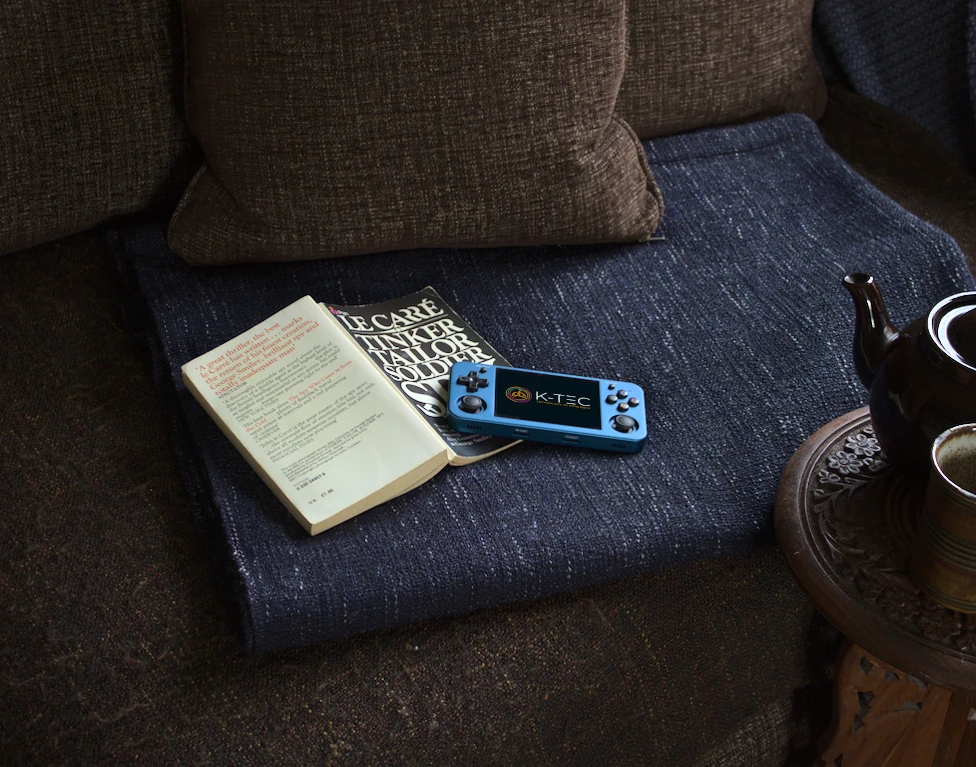
- 3.5″ 4:3 IPS screen, 640×480, 228 PPI, multi-touch
- RockChip RK3566 — same N64 performance as the RG353V
- Aluminium body, Hall Effect sticks, dual-boot ArkOS + GammaOS-RK3566
- See the Anbernic RG353M
Now retired — the Anbernic RG405M
This guide originally crowned the RG405M as the best N64 handheld I sold, and it earned it: a 4.0″ 4:3 panel — the largest 4:3 screen in the range — a UNISOC T618 chip that runs the full N64 library at full speed, and the standalone Mupen64Plus emulator on its GammaOS Lite firmware. That device has now sold through for good; I am not restocking it, and it is no longer available from me.
If you came here for the RG405M, the closest devices in spirit are the RG353M and the RG353V — and I want to be honest about the trade-off rather than call them equivalents. Both share the same 4:3 screen shape, so the N64 picture fills the panel the same way, but the screens are smaller: 3.5″ rather than 4.0″. And both run the RockChip RK3566 rather than the T618 — the N64 runs well and is one of that chip’s genuine strengths, but it is not the full-library-at-full-speed guarantee the T618 carried, and the headroom into the more demanding platforms beyond the N64 is not there. What you still get is the right screen shape, a configured emulator that plays rather than stutters, and a device I stand behind. If you already own an RG405M from me, its user guide remains available.
What about the Retroid Pocket 3 Plus, the RG DS and the G350?
The Retroid Pocket 3 Plus (£214.90) has the T618 chip that makes it a powerful device under the hood, and it can run the N64 with enhanced resolution and widescreen for the titles that support it — but its 4.7″ 16:9 widescreen panel is the wrong shape for the N64’s native 4:3 picture, so an N64 game pillarboxes into the centre with black bars down both sides. The same wide screen that is the ideal fit for the PSP is the one device here that fights the N64’s shape rather than fitting it. Like the RG405M, it has now sold through for good — so for an N64-first buyer it was never the best fit, and it is no longer available either.
The Anbernic RG DS (£147.90) has a 4.0″ 4:3 top screen that fits the N64 well, and it runs the N64 through the Mupen64Plus standalone emulator on its RockChip RK3568 chip — but the dual-screen and touch hardware it is built around exists for the Nintendo DS, which the N64 does not use. The RG DS is the device to buy if the DS is your priority; for the N64 it is workable but not its strength.
The BATLEXP G350 (from £94.90) is the value champion of the range, but its RockChip RK3326 chip only runs the N64 partially — it is a 2D-first device, and the N64 sits beyond what it does well. If the N64 is your main reason for buying, the G350 is not the device for it; buy it for the Game Boy, SNES and PS1 libraries it excels at.
How to choose
- You want the best N64 device I sell, and it is still available: RG353V. The right 4:3 screen, RK3566 performance where the N64 is a genuine strength, the configured Mupen64Plus set-up — and the lower price. Final stock, not restocked.
- You want that same RK3566 performance in a premium metal build: RG353M. Final stock — only a couple remain.
- You came here for the RG405M: it has retired — sold through with no restock. The RG353M and RG353V are the closest in spirit: same 4:3 shape, but a smaller screen and a less powerful chip, as set out above.
- You are tempted by the Retroid Pocket 3 Plus: it has also sold through — and its widescreen panel was the wrong shape for the N64’s 4:3 picture anyway.
- You are drawn to the BATLEXP G350 on price: it is the wrong chip for the N64 — buy it for the 2D libraries it does well.
Why a configured handheld plays the N64 better than a factory one
Because the N64 is a 3D console, the configuration work matters more here than on any 2D platform. Every device on this page has the right emulator matched to its chip — Mupen64Plus standalone on the T618 devices and the RG DS, the Rice renderer tuned on the RK3566 devices — with the per-game settings, the renderer choices and the save handling tested across the library. A direct import arrives with the default emulator at default settings, and on the N64 that is exactly where the stutter and the graphical glitches live.
Beyond the software, each device has had the factory SD card removed and replaced with a brand-name card from SanDisk, Samsung or Kioxia, and every one is covered by my Lifetime SD Card Guarantee — if the card fails or its data corrupts, for the life of the device I replace the card or restore it. A failed card is the single most common way a retro handheld dies, and it takes your saves with it. I wrote about exactly why that happens, and how I remove the risk, in Why Do Retro Handheld SD Cards Keep Failing?. The full picture of what changes between a factory handheld and one of mine is on The K-TEC Difference.
The short version
Because the N64 needs power, a 4:3 screen and a properly configured emulator all at once, the choice is more constrained than for the 2D platforms — and the RK3326 in the G350 and the 16:9 panel on the Retroid Pocket 3 Plus both fall out of the running for different reasons. Here is the honest situation: the RG405M, this guide’s original top pick, has sold through for good, and the Retroid Pocket 3 Plus has gone the same way — so the T618 tier is simply no longer on sale. The strongest N64 device I can still sell you is the RG353V: the right 4:3 screen, RK3566 performance where the N64 is a genuine strength, and the lower price. The RG353M is the premium version of the same experience in aluminium — and both are final stock I am not restocking, so it is worth acting while they are available. The RG DS is the one device here I am keeping in stock, and it runs the N64 through Mupen64Plus — though it is purpose-built for the DS. If you are unsure which fits you, contact me and I will point you at the right one.
Leave a Reply