

TL;DR — the picks
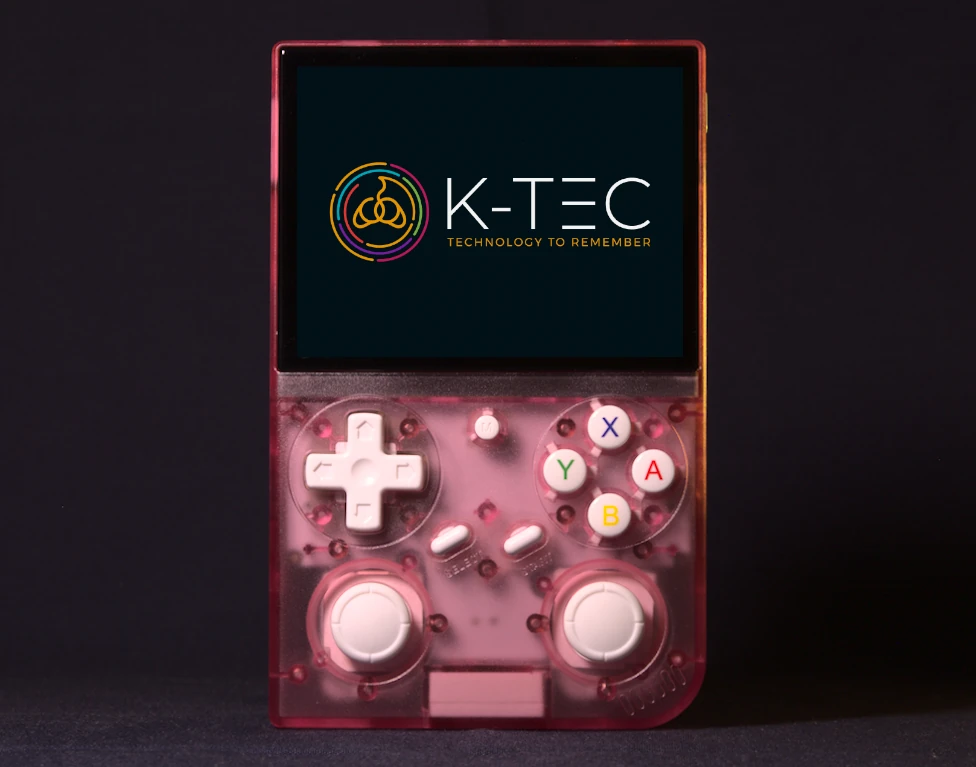
- The value pick: BATLEXP G350 — from £94.90. A small vertical handheld with the Atari 2600 among the 39 platforms configured and verified on its replacement dArkOS firmware — and the Atari 7800, its cartridge-compatible successor, alongside it. It is the best-stocked device I sell.
- The clamshell: Anbernic RG DS — from £147.90. The biggest 4:3 screen here at 4.0 inches, with the Atari 2600 among its 39 configured platforms, running through the Stella emulator. One of the two devices I am actively stocking, alongside the G350 — though it is purpose-built for the Nintendo DS.
- Final-stock vertical option: Anbernic RG353V — from £169.90. A lightweight vertical body, dual-boot firmware with the Atari 2600 configured on it, and the same sharp 3.5″ 228 PPI 4:3 panel as the G350. Three single units remain; I am not restocking it.
Every device here is dispatched from the UK. Prices are correct on the day this was written.
The machine itself — the cartridge pioneer
Atari launched the Video Computer System in 1977, a full decade before the Sega Master System reached British shops. The machine was renamed the Atari 2600 in 1982, and the idea inside it — a console built around swappable game cartridges — turned one box of hardware into a catalogue that kept growing. Its purpose was plain: to bring the arcade home, with a catalogue that leaned on the coin-operated hits of the late 1970s. In Britain the 2600 sat in living rooms through the early 1980s while the home computers — the ZX Spectrum and the Commodore 64 from 1982, the Amstrad CPC from 1984 — took the bedroom; each of those has had its own article in this series. The Atari 7800 followed in 1986 and plays the same cartridges as the 2600, which is why the two platforms travel together here: on every device below, both are configured.
Why the chip is not the decision
The Atari 2600 is a 1977 machine, and its software asks even less of a modern chip than the Sega Master System’s did — I made the full case in the Master System article, and the Game Boy and Commodore 64 articles made it again. Every processor here, from the G350’s entry-level RockChip RK3326 upwards, runs these games at full speed. You cannot pay extra for a device that runs the Atari 2600 better, and no chip in the range breaks a sweat over it. The decision is about the screen, the shape of the device, and the controls.
The screen question — a 4:3 television picture
The Atari 2600 drew its picture for the 4:3 televisions of the 1970s and 1980s, and that shape decides everything here. On the 4:3 panels — the 640×480 screens on every device on this page — the picture sits as it was designed to be seen. The 3.5″ panels on the G350 and the RG353V are 228 PPI, sharp for this picture, while the RG DS gives its top screen more physical space at 4.0″ and 200 PPI. On a 16:9 widescreen panel the same picture pillarboxes hard, with black bars standing in for everything the extra width cannot use.
The input question — one button
The 2600’s controller was a joystick with a single red button, and that simplicity is good news here: every gamepad on this page carries far more inputs than Atari’s joystick ever used, so there is nothing exotic to map and the games are immediately playable. The honest corner is the paddle — a spinning dial controller that some 2600 games were built around. On a handheld that dial has to be imitated with the standard controls, and that is the one part of the platform where a game can feel less natural than it did in 1977. If a specific paddle game is the one you are buying for, contact me first and I will check it for you.
The picks in detail
The value pick — BATLEXP G350 (from £94.90, in stock)
The G350 is the cheapest device I sell, and on the Atari 2600 it gives up nothing to the dearer ones. Its RockChip RK3326 is the entry-level chip in the range, and on software from 1977 it is the equal of everything above it: the Atari 2600 is among the 39 platforms configured and verified on its replacement dArkOS firmware, every one tested and working, with the Atari 7800 among them too. The 3.5″ 4:3 IPS panel — 640×480, 228 PPI, the same sharp screen as the RG353V — shows the picture as intended. It is a small vertical body that slips into a pocket, and it is the best-stocked device I sell, with 25 units across its colour and card options at the time of writing. What the lower price buys out of is everything past the 8-bit era: the RK3326 is a 2D-first chip, excellent through the Game Boy and the Mega Drive, good for the PS1, and honest about where it stops.
- 3.5″ 4:3 IPS screen, 640×480, 228 PPI — the same sharp panel as the RG353V
- RockChip RK3326 — Atari 2600 tested and configured among 39 platforms on dArkOS
- Atari 7800 configured alongside it
- Small vertical pocketable body
- See the BATLEXP G350
The clamshell — Anbernic RG DS (from £147.90, in stock)
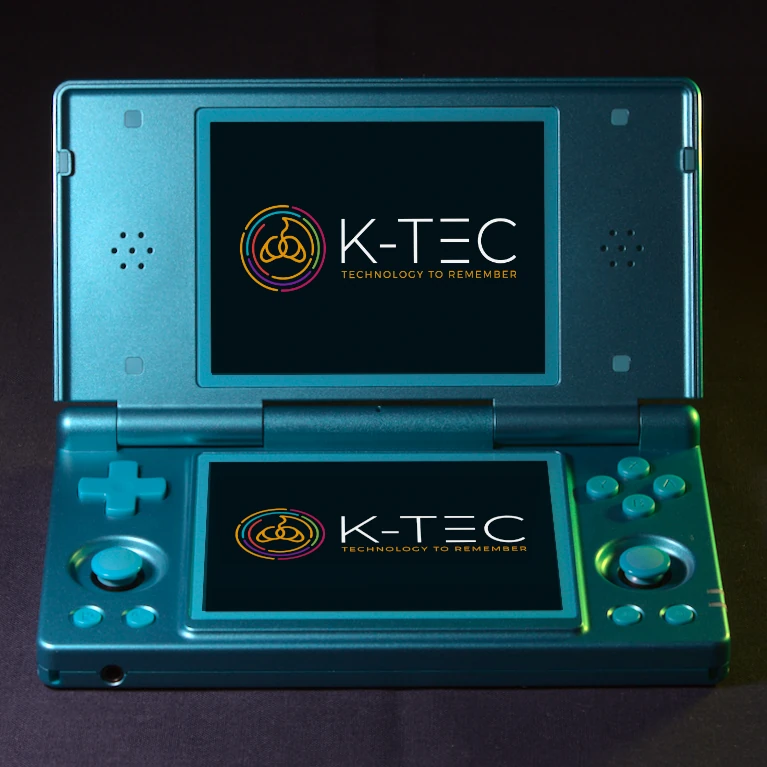
The RG DS headlines 39 configured platforms with the Atari 2600 among them, running through the Stella emulator on its RockChip RK3568 chip, and the Atari 7800 alongside it. The picture sits on the biggest 4:3 screen on this page — the 4.0″ top panel, 640×480, 200 PPI — and the clamshell form suits a machine you will want to protect: it closes over its own screen, so it travels in a way a bare slab does not. It is one of the two devices I am actively stocking alongside the G350, with nine units across five options at the time of writing. The honest caveat is the one this series has given before: the RG DS exists for the Nintendo DS, and its second screen and touch hardware go unused by an Atari 2600 game. If dual-screen gaming is a draw alongside the classics, the RG DS covers both; if the 2600 is your only priority, the same money goes further elsewhere.
- 4.0″ 4:3 IPS top screen, 640×480, 200 PPI — the biggest 4:3 screen here
- RockChip RK3568 — Atari 2600 among 39 configured platforms, via Stella
- Replacement GammaOS Next firmware with Daijishou frontend; clamshell, dual-screen, touch
- See the Anbernic RG DS
The final-stock option — Anbernic RG353V (from £169.90, in stock)
The RG353V pairs the same 3.5″ 4:3 panel as the G350 — 640×480, 228 PPI — with the range’s more capable RockChip RK3566 chip and dual-boot firmware: ArkOS on Linux and GammaOS-RK3566 on Android, with the Atari 2600 among the platforms configured on it. It is a lightweight vertical pocket device with a multi-touch panel, and that extra headroom matters if the 2600 is the start of a collection rather than the whole of it — the Dreamcast and PSP articles cover what the RK3566 does that the RK3326 does not. This is final stock — I am not restocking it, and three single units remain across its colour options.
- 3.5″ 4:3 IPS screen, 640×480, 228 PPI, multi-touch (the same sharp panel as the G350)
- RockChip RK3566
- Dual-boot ArkOS + GammaOS-RK3566
- See the Anbernic RG353V
How to choose
- You want Atari 2600 games for as little as possible: G350. Full-speed Atari 2600 among 39 tested and configured platforms, in a vertical pocketable body from £94.90 — and the best-stocked device I sell.
- You want the biggest 4:3 screen and a body that travels protected: RG DS. Atari 2600 among 39 configured platforms on a 4.0″ top screen, in a clamshell — with the Nintendo DS as its second string.
- You want a vertical pocket device with dual-boot firmware and headroom for later consoles: RG353V. The same sharp panel as the G350 plus multi-touch and the RK3566 chip — three single units, final stock.
Why a configured handheld plays Atari 2600 games better than a factory one
Every device on this page runs a replacement firmware rather than the stock operating system it ships with — dArkOS on the G350, GammaOS Next on the RG DS, and dual-boot ArkOS and GammaOS-RK3566 on the RG353V. On each of them the work shows in the places a factory device gets wrong: controls mapped correctly, screens scaled properly, and platforms tested and tuned rather than left at the defaults a direct import arrives with. The Arcade article covers the coin-op side of the same era, and the full picture of what changes between a factory handheld and one of mine is on The K-TEC Difference. If you are weighing a pre-configured UK device against a marketplace import, I have put that comparison in one place: K-TEC compared with other suppliers.
Beyond the software, each device has had the factory SD card removed and replaced with a brand-name card from SanDisk, Samsung or Kioxia, and every card is covered by my Lifetime SD Card Guarantee — for the life of the device, if the card fails or its data corrupts, I replace the card or restore it. A failed card is the single most common way a retro handheld dies, and it takes your saves with it. I wrote about exactly why that happens, and how I remove the risk, in Why Do Retro Handheld SD Cards Keep Failing?. Every device ships from UK stock by Royal Mail Tracked 48, arriving in 2–3 working days, with UK-based support on the other end of the phone.
The short version
The Atari 2600 is 1977 hardware, so power is not the story — it runs at full speed on every chip in the range, with the platform tested and configured on all three devices here. The picture was drawn for a 4:3 television, so the 4:3 panels show it as intended and widescreen spends its width on black bars. The G350 is the value pick — vertical, pocketable, from £94.90, and the best-stocked device I sell. The RG DS runs the platform through Stella on the biggest 4:3 screen here, inside a protective clamshell. The RG353V puts the same sharp panel in a dual-boot vertical body — final stock, three single units. If you are unsure which fits you, contact me and I will point you at the right one.

Leave a Reply