

TL;DR — the picks
- Best-built Master System handheld I sell — final units: Anbernic RG405M — from £199.90, a 4.0″ 4:3 panel that the Master System’s exactly-4:3 picture fills edge to edge, an aluminium body with drift-resistant Hall Effect sticks, and a UNISOC T618 chip with more power than this platform will ever ask for. It is the best-built 4:3 device I sell, and it is down to its final units with no restock planned.
- The value pick: BATLEXP G350 — from £94.90. The Master System is an 8-bit console, and its RockChip RK3326 chip runs the full library at full speed — exactly as the T618 does. Nothing on this platform separates the £95 device from the £200 one, and the G350’s 3.5″ 4:3 panel is the same sharp 228 PPI screen as the pricier RG353V and RG353M. In stock now, across every colour.
- The still-stocked clamshell: Anbernic RG DS — from £144.90, a RockChip RK3568 chip, a 4.0″ 4:3 top screen that fills edge to edge, and Master System among its out-of-box platforms — one of the two devices I am actively stocking (alongside the G350), though it is purpose-built for the Nintendo DS.
- Final-stock sharp-screen options: Anbernic RG353V (from £149.90) and Anbernic RG353M (£184.90) — the same full-speed Master System on the same sharp 3.5″ 228 PPI 4:3 panel as the G350, in a vertical pocket shape (RG353V) or a metal body (RG353M). Both are final stock; the RG353M is in stock in both colours.
Every device here is dispatched from the UK. Prices are correct on the day this was written.
What actually makes a good Master System handheld
No console in this series so far carries more British nostalgia than the Master System. Launched in Japan in 1985 and arriving in Europe in 1987, it did something its maker never managed in North America: through the late 1980s and early 1990s it was the dominant 8-bit console in the UK and Europe, comfortably outselling its Nintendo rival on these shores. For a UK buyer of a certain age, 8-bit Sega is not the alternative childhood — it was the childhood. Sega itself tried the handheld version five years after the console: the Game Gear, launched in 1990, was close to a Master System in a handheld case — built around the same Zilog Z80 processor, drawing much of its library from the console. The handhelds in this article take up the same idea with modern hardware — the Master System library on a portable machine — with a far sharper screen and a battery you recharge rather than replace.
On power, the Master System is an 8-bit machine built around a Zilog Z80 processor running at a few megahertz. Emulating it barely registers on any chip in the range: from the RockChip RK3326 in the G350 to the UNISOC T618 in the RG405M, every device I sell runs the full library at full speed with headroom to spare. As with the Mega Drive, you cannot buy a device here that runs the Master System badly, and you cannot pay extra for one that runs it better. The decision comes down to the screen, the controls, and the build — and on the Master System, the screen story is the cleanest in this series.
The screen: 256×192 is exactly 4:3, and it fills a 4:3 panel perfectly. The Master System draws its picture at 256×192 — unlike most consoles, which overshoot or undershoot the television frame slightly, that is exactly 4:3. Which means on any of the 4:3 panels in the range — the 640×480 screens on the G350, the RG353V, the RG353M, the RG405M and the RG DS — the picture scales up by the same clean factor in both directions and fills the screen edge to edge, with no letterboxing and no pillarboxing at all. The Mega Drive’s 320×224 frame letterboxes by a sliver; the Neo Geo’s arcade picture by a touch more. The Master System is the one platform so far that fits a 4:3 handheld screen mathematically exactly. The two widescreen devices — the PowKiddy RGB10 Max 2 with its 5.0″ 16:9 panel, and the Retroid Pocket 3 Plus (4.7″, 16:9) — pillarbox instead, drawing black bars left and right to pad the wider frame. In the PSP article those panels were the right answer; for an exactly-4:3 platform they are the wrong one, for the same reason they were wrong for the Mega Drive and the GBA.
The controls: two buttons, and one quirk worth knowing. The Master System’s pad is the simplest of its era in this series: a directional pad and two buttons. Every handheld here carries four face buttons, so the two inputs land directly with two to spare — there is no layout puzzle like the six-button Mega Drive or the four-in-a-row Neo Geo to solve. The quirk is pause: the Master System put its pause button on the console itself, not on the controller, so on a handheld the pause has to live somewhere else. A curiosity of the era rather than a problem: the games themselves never asked for more than two buttons and a directional pad.
Power, as ever on this platform, is not a decision at all. What separates the devices here is panel quality, body quality, and how far past the 8-bit era you want to reach — the same things that separated them for the Mega Drive, with one difference: this time even the cheapest chip in the range is not merely sufficient but effortless.
The picks in detail
Best-built Master System handheld I sell — Anbernic RG405M (from £199.90, final units)
If you want the best-built 4:3 device in the range and the headroom to reach far past the 8-bit era, this is the pick. The RG405M has a 4.0″ 4:3 IPS panel that the Master System’s exactly-4:3 picture fills completely, and its UNISOC T618 chip treats the platform as a warm-up — the same chip reaches PS1 with double-resolution rendering, Dreamcast, the N64 and the PSP. The aluminium body and Hall Effect sticks give it a substantial, gamepad-like feel, the two Master System buttons land on the face layout with room to spare, and the 200 PPI panel carries 8-bit artwork cleanly at scale. I will be straight that I am selling the last of these: no restock is planned, and only a couple of units remain.
- 4.0″ 4:3 IPS screen, 640×480, 200 PPI, multi-touch (the Master System picture fills it exactly, edge to edge)
- UNISOC T618 — full Master System library at full speed; reaches PS1, Dreamcast, N64, PSP
- Replacement GammaOS Lite firmware with Daijishou frontend
- See the Anbernic RG405M
The value pick — BATLEXP G350 (from £94.90, in stock)
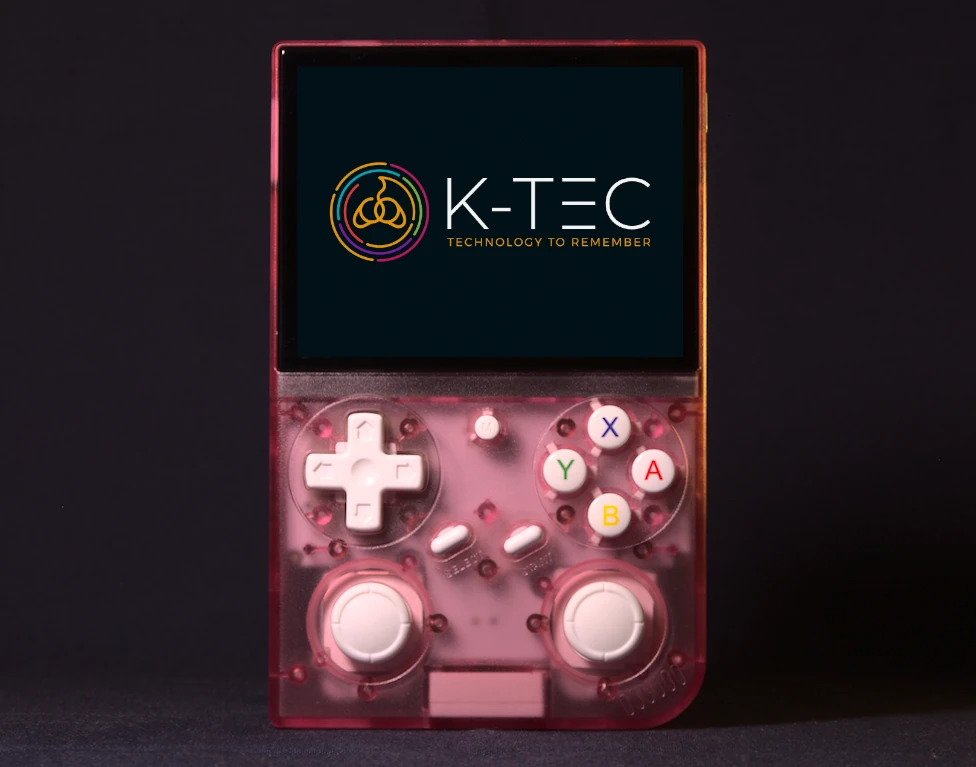
On no platform is the value argument cleaner than this one. The Master System is an 8-bit console, and the G350’s RockChip RK3326 — the entry-level chip in the range — runs the full library at full speed with more headroom than it knows what to do with. There is nothing the £200 device does on this platform that the £95 device does not. The G350’s 3.5″ 4:3 panel is the same 228 PPI screen as the RG353V and RG353M — the sharpest pixel density in the range — and at 2.5× scale the Master System’s 256×192 picture fills it exactly, edge to edge. The replacement dArkOS firmware carries the platform tested and configured, and the two-button games need nothing the pad does not have. What the lower price buys out of is everything that is not 8-bit: the RK3326 is a 2D-first chip, excellent through the Game Boy, the SNES, the Mega Drive and the Master System, good for the PS1, and honest about where it stops. For 8-bit Sega specifically, the G350 is the equal of anything here at less than half the price of the most expensive device in the range — and it is the best-stocked device I sell.
- 3.5″ 4:3 IPS screen, 640×480, 228 PPI — the same sharp panel as the RG353V and RG353M; the 256×192 picture fills it exactly
- RockChip RK3326 — full Master System library at full speed; 2D-first, PS1-capable
- Replacement dArkOS firmware (Linux); Master System among the tested platforms
- See the BATLEXP G350
The still-stocked clamshell — Anbernic RG DS (from £144.90, in stock)
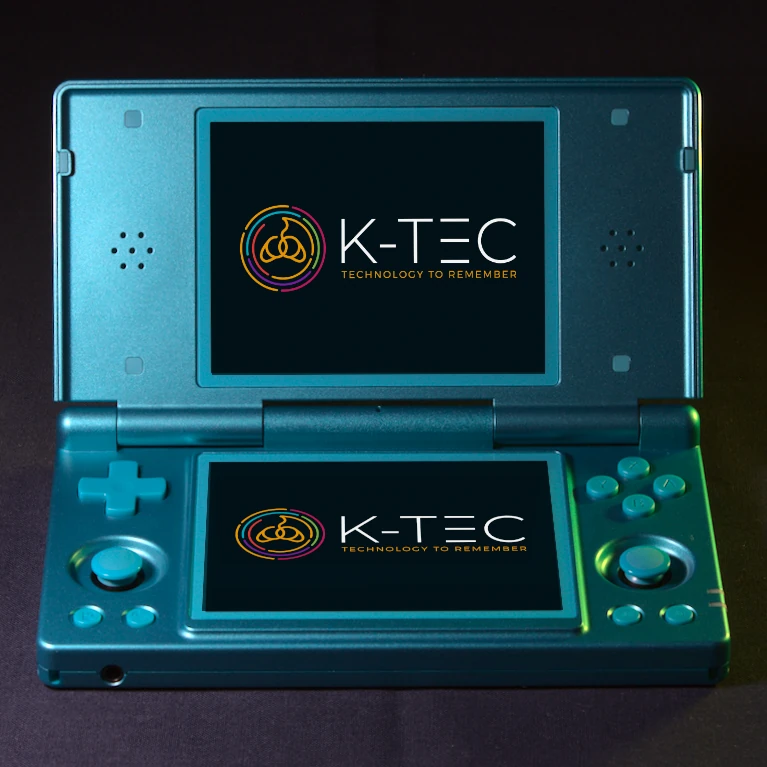
The RG DS lists the Master System among the platforms configured out of the box, running on its RockChip RK3568 chip at full speed on a 4.0″ 4:3 top screen that the exactly-4:3 picture fills completely. It is one of the two devices I am keeping in stock — alongside the BATLEXP G350 — while the RG405M sells through and the RG353V and RG353M run down their final units. The honest caveat is the same one I gave in the Neo Geo article: the RG DS exists for the Nintendo DS, and its second screen and touch hardware go unused by an 8-bit console. If dual-screen gaming is a draw alongside 8-bit Sega — the DS article covers why that pairing works — the RG DS does both well; if the Master System is your only priority, the same money goes further elsewhere.
- 4.0″ 4:3 IPS top screen, 640×480, 200 PPI (the Master System picture fills it exactly)
- RockChip RK3568 — full Master System library at full speed, configured out of the box
- Replacement GammaOS Next firmware with Daijishou frontend; clamshell, dual-screen, touch
- See the Anbernic RG DS
Final-stock sharp-screen options — Anbernic RG353V and RG353M
The RG353V (from £149.90) and its metal-bodied sibling the RG353M (£184.90) share the same RockChip RK3566 chip and — worth saying plainly — the same 3.5″ 4:3 panel as the G350: 640×480, 228 PPI. On the Master System that panel is at its best: the exactly-4:3 picture fills it edge to edge at a clean uniform scale, and 8-bit artwork renders crisp. Both devices ship dual-boot — ArkOS on Linux and GammaOS-RK3566 on Android — each configured in its own right. The difference between the two is build, not screen or performance: the RG353V is a lightweight vertical pocket device, the RG353M a heavier horizontal aluminium body with drift-resistant Hall Effect sticks. I should be straight that both are final stock — I am not restocking either. The RG353V still has a few single units across its variations; the RG353M is in stock in both colours at £184.90, so if that metal body appeals, it is worth acting quickly.
- 3.5″ 4:3 IPS screen, 640×480, 228 PPI, multi-touch (the same sharp panel as the G350, plus touch)
- RockChip RK3566 — full Master System library at full speed
- Dual-boot ArkOS + GammaOS-RK3566
- See the Anbernic RG353V · See the Anbernic RG353M
What about the widescreen devices?
The exactly-4:3 Master System picture cannot fill a 16:9 frame without stretching, so the widescreen devices pillarbox it — black bars to the left and right of the image, for the same reason they did on the Mega Drive and the GBA, and for the opposite reason widescreen suited the PSP.
The PowKiddy RGB10 Max 2 (£159.90) runs the Master System at full speed on the same RockChip RK3326 chip as the G350 — identical performance, in fact. Its 5.0″ 16:9 panel is comfortable and its ergonomic grip is genuinely good, but the pillarboxed picture puts its width to work on black bars, and it is down to a single Ice Special Edition unit. Its RetroOZ firmware is its real strength rather than its fit for an exactly-4:3 platform.
The Retroid Pocket 3 Plus, which appeared in earlier articles in this series, has since sold through — it was final stock, and it is gone. Its UNISOC T618 chip and 4.7″ 16:9 panel made it the best PSP device in the range, and that is the platform to remember it by.
How to choose
- You want the best-built 4:3 device and the headroom for more: RG405M. Aluminium body, Hall Effect sticks, the exactly-4:3 picture filling a 4.0″ panel — the premium experience, but final units with no restock planned.
- You are buying for the Master System and you want to spend less: G350. Full-speed 8-bit Sega at £94.90 on the same sharp 228 PPI panel as the RG353V and RG353M, the picture filling it exactly — and the best-stocked device I sell.
- The Nintendo DS is a draw alongside 8-bit Sega: RG DS. Full-speed Master System configured out of the box, dual-screen and touch for the DS, and one of the two devices I am keeping in stock.
- You want a metal body or a sharp vertical pocket device: RG353M (metal) or RG353V (vertical pocket). The same sharp 228 PPI panel as the G350, plus multi-touch and dual-boot firmware — final stock, while it lasts.
- You are drawn to the RGB10 Max 2: it runs the Master System at full speed, but it pillarboxes the exactly-4:3 picture on its 16:9 panel and it is down to a single unit — buy it for its grip and firmware, not for this platform.
Why a configured handheld plays the Master System better than a factory one
Every device on this page runs a replacement firmware rather than the stock operating system it ships with — dArkOS on the G350, GammaOS Lite on the RG405M, GammaOS Next on the RG DS, dual-boot ArkOS and GammaOS-RK3566 on the RG353V and RG353M, and RetroOZ on the RGB10 Max 2. On each of them the Master System runs through mature, full-speed emulation, and the work shows in the places a factory device gets wrong: the two-button controls mapped correctly, the platform tuned and tested rather than left at the defaults a direct import arrives with. The SNES article covers the same story from the other side of the 8-bit era.
Beyond the software, each device has had the factory SD card removed and replaced with a brand-name card from SanDisk, Samsung or Kioxia, and every one is covered by my Lifetime SD Card Guarantee — if the card fails or its data corrupts, for the life of the device I replace the card or restore it. A failed card is the single most common way a retro handheld dies, and it takes your saves with it. I wrote about exactly why that happens, and how I remove the risk, in Why Do Retro Handheld SD Cards Keep Failing?. The full picture of what changes between a factory handheld and one of mine is on The K-TEC Difference.
The short version
The Master System is an 8-bit console, so power is not the story — every device I sell runs the full library at full speed, from the £94.90 BATLEXP G350 to the £199.90 Anbernic RG405M. It is also the one platform in this series whose picture is exactly 4:3, so the screen decision is unusually clean: the 4:3 panels fill edge to edge, the 16:9 ones pillarbox. The RG405M is the best-built 4:3 device — final units, no restock. The G350 is the value pick, in stock across every colour, on the sharp 228 PPI panel it shares with the RG353V and RG353M. The RG DS is one of two I am keeping in stock, dual-screen and touch, with the Master System configured out of the box. The RG353V and RG353M share that same sharp 228 PPI panel — final stock, the RG353M in stock in both colours. The RGB10 Max 2 runs it at full speed too but pillarboxes, down to a single unit, and the Retroid Pocket 3 Plus has sold through. If you are unsure which fits you, contact me and I will point you at the right one.
Leave a Reply