

TL;DR — the picks
The best retro handheld for Sega 32X games comes down to two devices, and I have tested the platform on both.
- The value pick: BATLEXP G350 — from £94.90. A small vertical handheld with the Sega 32X among the 39 platforms configured and verified on its replacement dArkOS firmware, running through the PicoDrive emulator. It is the best-stocked device I sell.
- The clamshell: Anbernic RG DS — from £147.90. A 4.0″ 4:3 screen with the Sega 32X among its 39 configured platforms, also through PicoDrive. One of the two devices I am actively stocking, alongside the G350 — though it is purpose-built for the Nintendo DS.
Every device here is dispatched from the UK. Prices and stock are correct as at the time of writing.
The machine itself — an add-on that needed a Mega Drive
The Sega 32X was not a console you could plug in on its own. It slotted into the cartridge slot of a Mega Drive, sat on top of the console and used it as its host. It needed a cable linking the two and a power supply of its own, and its games were sold on cartridges that only it could run.
Sega pitched it as a low-cost route into 32-bit gaming: inside were two 32-bit SuperH-2 processors, and the picture it sent to the television could draw on a palette of 32,768 colours. Sega launched it in North America in November 1994 and brought it to Europe the same month, where it sold as the Mega Drive 32X. Its run was short — Sega discontinued it early in 1996, after little more than a year on sale — and it has stayed an awkward, ambitious corner of the mid-1990s since. The Master System, Game Gear and Dreamcast articles cover the rest of Sega’s machines in this series.
Why the chip is not the decision
On both devices here the 32X runs through the same emulator, PicoDrive, which handles the Mega Drive as well. I tested the platform on each device before offering it, and it passed on both — so this is not a purchase where paying more buys a better-running 32X. The RockChip RK3326 in the G350 is the entry-level chip in my range and the RockChip RK3568 in the RG DS is a faster one; the extra speed is not what you would be buying it for here. The decision comes down to the screen, the shape of the device and the controls — the same conclusion the Mega Drive and Vectrex articles reached for their platforms.
The screen question — a Mega Drive picture on a 4:3 panel
The 32X drew its picture for the same 4:3 televisions as the Mega Drive it sat on, so a 4:3 panel is its natural home. Both devices here have one. The G350 carries a 3.5″ 4:3 panel at 640×480 and 228 PPI; the RG DS gives the picture more physical space on a 4.0″ 4:3 panel at the same resolution. On either, a 32X game fills the display the way it filled the family television — no stretching, no wasted space.
The controls question — a Mega Drive pad, and nothing else needed
The 32X had no controller of its own. Its games were played on the Mega Drive’s pads, six-button layout included, so no 32X game asks for more than a directional pad and the six buttons of Sega’s later controller. Both devices here carry a directional pad, four face buttons and exactly four shoulder buttons — L1, L2, R1 and R2 — which is more inputs than the 32X ever asked for, so nothing goes unmapped. The RG DS also has a left analogue stick that I have mapped and tested working on this platform, if you would rather steer with a stick than a pad.
One setting is worth knowing in advance: on the RG DS I turn rewind off for the 32X. Rewind lets you roll a game back a few seconds after a mistake, and I enable it across the RetroArch platforms on that device — but on this one it costs the emulator performance, so it is off.
The picks in detail
The value pick — BATLEXP G350 (from £94.90, in stock)
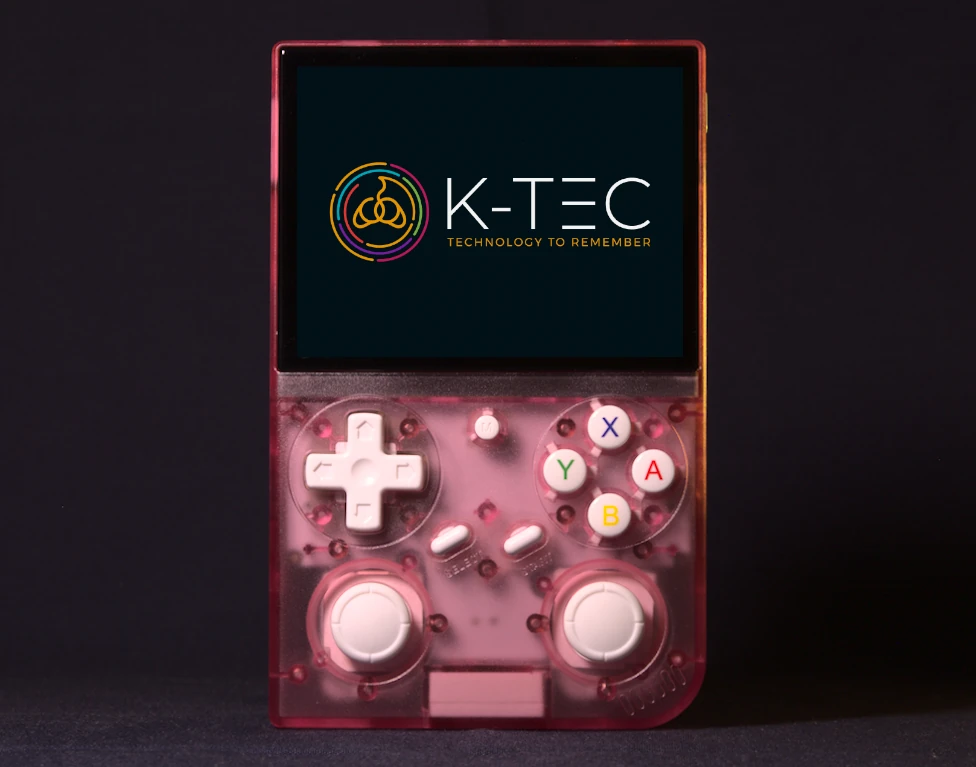
The G350 is the cheapest device I sell, and on the 32X it gives up nothing to the device above it in how it runs the platform. Its RockChip RK3326 is the entry-level chip in the range, and the Sega 32X is among the 39 platforms configured and verified on its replacement dArkOS firmware, tested and working through the PicoDrive emulator. The 3.5″ 4:3 IPS panel — 640×480, 228 PPI — shows the picture at its intended proportions, filling the screen. It is a small vertical body that slips into a pocket, and it is the best-stocked device I sell, with 24 units across its colour and card options at the time of writing. What the lower price limits is the later 3D machines: the RK3326 is a 2D-first chip, excellent through the Game Boy and the Mega Drive, good for the PS1, and honest about where it stops.
- 3.5″ 4:3 IPS screen, 640×480, 228 PPI
- RockChip RK3326 — Sega 32X tested and configured among 39 platforms on dArkOS, via the PicoDrive emulator
- Small vertical pocketable body
- See the BATLEXP G350
The clamshell — Anbernic RG DS (from £147.90, in stock)
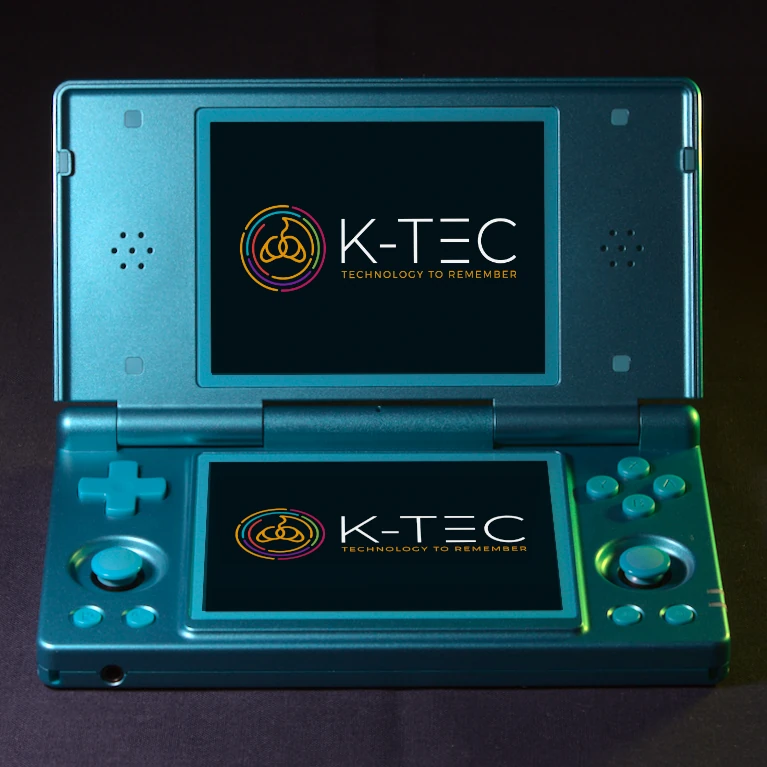
The RG DS headlines 39 configured platforms with the Sega 32X among them, running through PicoDrive on its RockChip RK3568 chip. The picture sits on the bigger of the two screens on this page — 4.0″ corner to corner, 640×480 — and its left analogue stick is mapped and tested for the platform if you prefer it to the pad. The clamshell form suits a machine you will want to look after: it closes over its own screens, so it travels in a way a bare slab does not. It is one of the two devices I am actively stocking alongside the G350, with seven units across five options at the time of writing. Two things to weigh honestly. Rewind is off on this platform, as explained above. And the RG DS exists for the Nintendo DS — its second screen and touch hardware go unused by a 32X game. If dual-screen gaming is a draw alongside the classics, the RG DS covers both; if the 32X is your only priority, the G350 plays it for £53 less.
- 4.0″ 4:3 IPS screen, 640×480, 200 PPI — the bigger screen on this page
- RockChip RK3568 — Sega 32X among 39 configured platforms, via the PicoDrive emulator; left analogue stick mapped and tested for the platform
- Replacement GammaOS Next firmware with Daijishou frontend; clamshell, dual-screen, touch
- See the Anbernic RG DS
How to choose
- You want 32X games for as little as possible: G350. The Sega 32X tested and configured among 39 platforms in a vertical pocketable body from £94.90 — and the best-stocked device I sell.
- You want the bigger screen, an analogue stick and a case that closes: RG DS. The Sega 32X among 39 configured platforms on a 4.0″ screen, with the Nintendo DS as its second string.
If there is one specific game you are buying for, contact me first and I will check it for you.
Why a configured handheld plays Sega 32X games better than a factory one
Both devices on this page run a replacement firmware rather than the stock operating system they ship with — dArkOS on the G350 and GammaOS Next on the RG DS. On each of them the work shows in the places a factory device gets wrong: controls mapped correctly, screens scaled properly, and platforms tested and tuned rather than left at the defaults a direct import arrives with. The 32X shows what that testing means in practice. On the RG DS I enable rewind across the RetroArch platforms, then turn it off where the emulator pays for it — and this platform is one of those. That is a decision made by playing the games, not by reading a specification sheet. The Mega Drive article covers the console the 32X sat on, and the full picture of what changes between a factory handheld and one of mine is on The K-TEC Difference. If you are weighing a pre-configured UK device against a marketplace import, I have put that comparison in one place: K-TEC compared with other suppliers.
Beyond the software, each device has had the factory SD card removed and replaced with a brand-name card from SanDisk, Samsung or Kioxia, and every card is covered by my Lifetime SD Card Guarantee — for the life of the device, if the card fails or its data corrupts, I replace the card or restore it. A failed card is the single most common way a retro handheld dies, and it takes your saves with it. I wrote about exactly why that happens, and how I remove the risk, in Why Do Retro Handheld SD Cards Keep Failing?. Every device ships from UK stock by Royal Mail Tracked 48, arriving in 2–3 working days, with UK-based support on the other end of the phone.
The short version
The 32X is 1994 hardware, tested and working on both devices here through the PicoDrive emulator, so power is not the story. The G350 is the value pick — vertical, pocketable, from £94.90, with the 32X among its 39 configured platforms, and the best-stocked device I sell. The RG DS puts the same platform on a 4.0″ screen with an analogue stick that is tested for it, inside a clamshell that closes over the screen — with rewind turned off on this platform, and the Nintendo DS as its main purpose. If you are unsure which fits you, contact me and I will point you at the right one.

Leave a Reply