
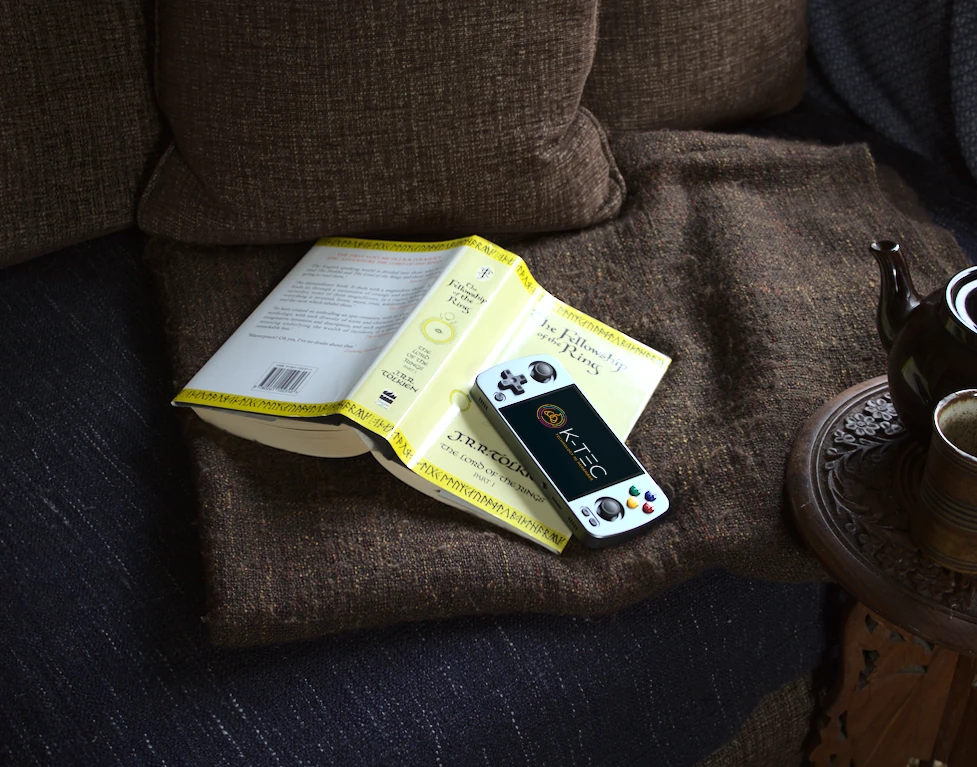

TL;DR — the picks
- Best-built PC Engine handheld I sell — final units: Anbernic RG405M — from £199.90, a 4.0″ 4:3 panel that suits the PC Engine’s near-4:3 picture, an aluminium body with drift-resistant Hall Effect sticks, and a UNISOC T618 chip that treats the platform as a warm-up. It is the best-built 4:3 device I sell, and it is down to its final two units with no restock planned.
- The value pick: BATLEXP G350 — from £94.90. The PC Engine is an 8-bit-era console, and the G350’s RockChip RK3326 runs it at full speed — exactly as the T618 does. Nothing on this platform separates the £95 device from the £200 one. Its replacement dArkOS firmware carries TurboGrafx-16 and its CD add-on platform tested and configured, and it is the best-stocked device I sell.
- The still-stocked clamshell: Anbernic RG DS — from £144.90, a RockChip RK3568 chip, a 4.0″ 4:3 top screen, and TurboGrafx-16 and TurboGrafx-CD among its out-of-box platforms — one of the two devices I am actively stocking (alongside the G350), though it is purpose-built for the Nintendo DS.
- Final-stock sharp-screen options: Anbernic RG353V (from £149.90) and Anbernic RG353M (£184.90) — the same full-speed PC Engine on the same sharp 3.5″ 228 PPI 4:3 panel as the G350, in a vertical pocket shape (RG353V) or a metal body (RG353M). Both are final stock; the RG353M is down to two units.
Every device here is dispatched from the UK. Prices are correct on the day this was written.
What actually makes a good PC Engine handheld
This series has covered platforms most British buyers grew up with. The PC Engine is the opposite, and that is its whole appeal. Launched in Japan in 1987 by NEC — an electronics giant pairing with Hudson Soft, the chip designer behind the machine — it became one of Japan’s best-selling consoles, at its peak going toe-to-toe with the Famicom and Super Famicom in the sales charts. It was also one of the smallest home consoles ever made: a little white box you could sit in one hand. Renamed the TurboGrafx-16 for North America in 1989, it never officially launched in the UK at all — the only official European release was in France. In Britain it existed as an import legend: the machine the import pages of the gaming magazines raved about, sold in tiny numbers through grey-import mail order, that almost nobody actually saw in a shop. For a certain kind of British player the PC Engine nostalgia is not the childhood — it is the one that got away, the platform you read about and never got to own. A configured handheld is the first realistic way most UK players have ever had to properly explore it.
There is also a family connection that makes this platform unusually apt for a handheld article. In 1990 NEC released the PC Engine GT — the TurboExpress overseas — a handheld that ran the exact same game cards as the console. It was the first time anyone put a home console in a pocket, decades before that idea became ordinary, and it was famously expensive and famously hard on batteries. The idea was decades ahead of what the hardware and battery technology of 1990 could deliver. The handhelds in this article are that promise finally kept: the same library, pocketable, with a sharper screen and a battery you recharge rather than feed.
On power, none of this is hard work. The PC Engine is an 8-bit-era machine, and emulating it barely registers on any chip in the range: from the RockChip RK3326 in the G350 to the UNISOC T618 in the RG405M, every device I sell runs the platform at full speed with headroom to spare. As with the Master System and the Mega Drive, you cannot buy a device here that runs the PC Engine badly, and you cannot pay extra for one that runs it better. The decision comes down to the screen, the controls, and the build.
The screen: near-4:3, and happiest on a 4:3 panel. The PC Engine drew its picture for a 4:3 television, and its 256×239 frame is close to that shape — marginally squarer. On the 640×480 4:3 panels in the range — the G350, the RG353V, the RG353M, the RG405M and the RG DS — the picture scales by a clean factor of two with only slim pillarbox bars left and right, far closer to full-frame than anything widescreen manages. The two 16:9 devices — the PowKiddy RGB10 Max 2 with its 5.0″ panel, and the Retroid Pocket 3 Plus (4.7″) — draw the usual heavy black bars to pad the wider frame, for the same reason they did on the Mega Drive and the GBA. The widescreen panels were the right answer for the PSP; for a 4:3-era console they are the wrong one.
The controls: two buttons, a clean landing. The standard PC Engine pad is a directional pad and two buttons — the same simplicity as the Master System’s pad from the same era. Every handheld here carries four face buttons, so the two inputs land directly with two to spare. Later six-button pads existed for fighting games, but the platform built its Japanese reputation on shoot-em-ups, and those ask for nothing more than a good d-pad.
The CD add-on: the first of its kind, configured where it counts. The PC Engine was the first home console to use CD-ROM, via an add-on drive in 1988 — years ahead of its rivals — and that CD library is half of what makes the platform worth exploring today. TurboGrafx-16 and TurboGrafx-CD are both carried tested and configured on the G350’s dArkOS build and listed among the RG DS’s out-of-box platforms. The one corner I leave out is the SuperGrafx, a Japan-only enhanced variant that never reached the UK at all — its handful of games stayed Japanese exclusives, and I do not configure it.
The picks in detail
Best-built PC Engine handheld I sell — Anbernic RG405M (from £199.90, final units)
If you want the best-built 4:3 device in the range and the headroom to reach far past the 8-bit era, this is the pick. The RG405M has a 4.0″ 4:3 IPS panel that shows the PC Engine’s near-4:3 picture almost full-frame, and its UNISOC T618 chip treats the platform as a warm-up — the same chip reaches PS1 with double-resolution rendering, Dreamcast, the N64 and the PSP. The aluminium body and Hall Effect sticks give it a substantial, gamepad-like feel, and the two-button games need nothing the pad does not have. I will be straight that I am selling the last of these: no restock is planned, and two units remain — the Essential tier at £199.90 and the Expanded at £224.90.
- 4.0″ 4:3 IPS screen, 640×480, 200 PPI, multi-touch (near-full-frame PC Engine picture)
- UNISOC T618 — full-speed PC Engine; reaches PS1, Dreamcast, N64, PSP
- Replacement GammaOS Lite firmware with Daijishou frontend
- See the Anbernic RG405M
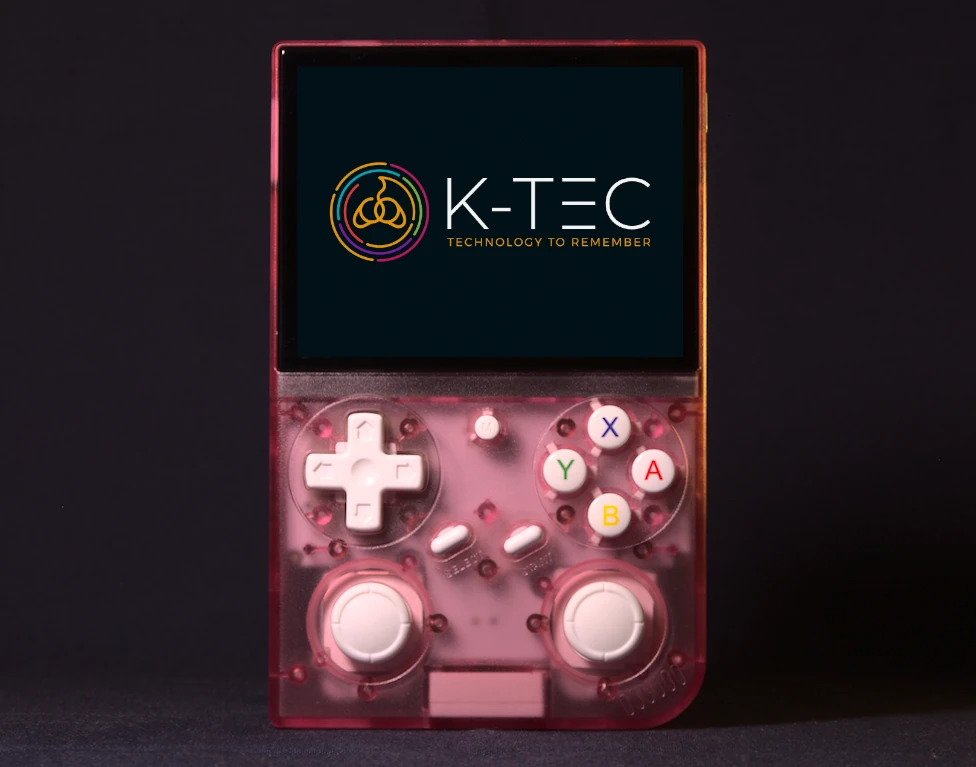
The value pick — BATLEXP G350 (from £94.90, in stock)
The PC Engine is an 8-bit-era console, and the G350’s RockChip RK3326 — the entry-level chip in the range — runs it at full speed with headroom to spare. There is nothing the £200 device does on this platform that the £95 device does not. The G350’s 3.5″ 4:3 panel is the same 228 PPI screen as the RG353V and RG353M — the sharpest 4:3 pixel density in the range — and the PC Engine’s 256×239 picture scales onto it at a clean factor of two with only slim pillarbox bars. Its replacement dArkOS firmware carries both TurboGrafx-16 and TurboGrafx-CD tested and configured — the full platform story, CD drive included, at the lowest price in the range. What the lower price buys out of is everything past the 8-bit era: the RK3326 is a 2D-first chip, excellent through the Game Boy, the SNES, the Mega Drive and the Master System, good for the PS1, and honest about where it stops. And the G350 is the best-stocked device I sell, in stock across every colour.
- 3.5″ 4:3 IPS screen, 640×480, 228 PPI — the same sharp panel as the RG353V and RG353M
- RockChip RK3326 — full-speed PC Engine and TurboGrafx-CD; 2D-first, PS1-capable
- Replacement dArkOS firmware (Linux); TG-16 and TG-CD among the tested platforms
- See the BATLEXP G350
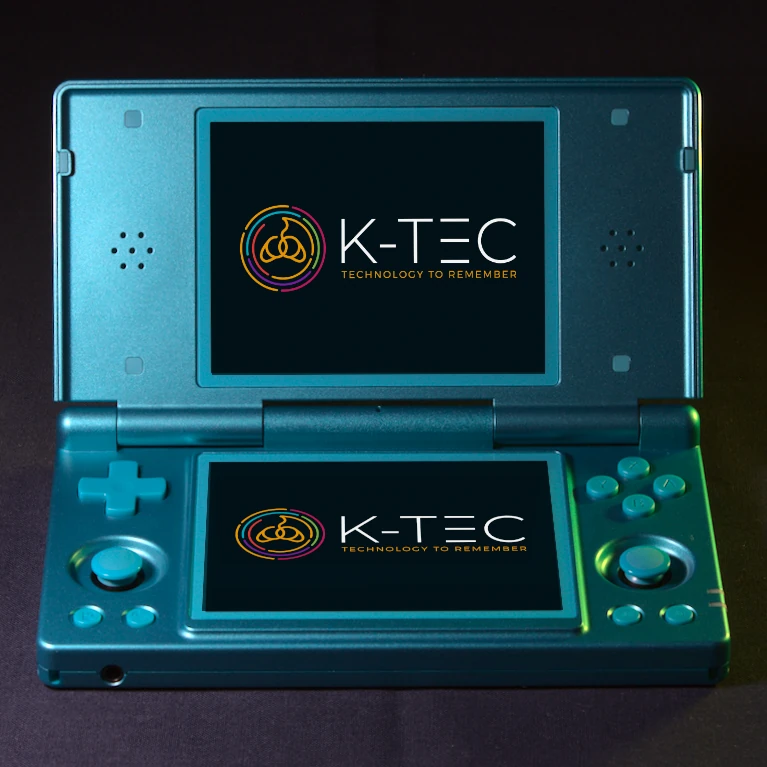
The still-stocked clamshell — Anbernic RG DS (from £144.90, in stock)
The RG DS lists TurboGrafx-16 and TurboGrafx-CD among the platforms configured out of the box, running on its RockChip RK3568 chip at full speed on a 4.0″ 4:3 top screen. It is one of the two devices I am keeping in stock — alongside the BATLEXP G350 — while the RG405M sells through and the RG353V and RG353M run down their final units. The honest caveat is the one I gave in the Neo Geo article: the RG DS exists for the Nintendo DS, and its second screen and touch hardware go unused by an 8-bit-era console. If dual-screen gaming is a draw alongside PC Engine exploration — the DS article covers why that pairing works — the RG DS does both well; if the PC Engine is your only priority, the same money goes further elsewhere.
- 4.0″ 4:3 IPS top screen, 640×480, 200 PPI (near-full-frame PC Engine picture)
- RockChip RK3568 — full-speed PC Engine, configured out of the box
- Replacement GammaOS Next firmware with Daijishou frontend; clamshell, dual-screen, touch
- See the Anbernic RG DS
Final-stock sharp-screen options — Anbernic RG353V and RG353M
The RG353V (from £149.90) and its metal-bodied sibling the RG353M (£184.90) share the same RockChip RK3566 chip and — worth saying plainly — the same 3.5″ 4:3 panel as the G350: 640×480, 228 PPI, the sharpest 4:3 pixel density in the range. Both devices ship dual-boot — ArkOS on Linux and GammaOS-RK3566 on Android — each configured in its own right. The difference between the two is build, not screen or performance: the RG353V is a lightweight vertical pocket device, the RG353M a heavier horizontal aluminium body with drift-resistant Hall Effect sticks. I should be straight that both are final stock — I am not restocking either. The RG353V still has four single units across its variations; the RG353M is down to two units at £184.90.
- 3.5″ 4:3 IPS screen, 640×480, 228 PPI, multi-touch (the same sharp panel as the G350, plus touch)
- RockChip RK3566 — full-speed PC Engine
- Dual-boot ArkOS + GammaOS-RK3566
- See the Anbernic RG353V · See the Anbernic RG353M
What about the widescreen devices?
The PC Engine’s near-4:3 picture cannot fill a 16:9 frame without stretching, so the widescreen devices draw heavy black bars left and right — for the same reason they did on the Mega Drive and the Master System, and for the opposite reason widescreen suited the PSP.
The PowKiddy RGB10 Max 2 (£159.90) runs the PC Engine at full speed on the same RockChip RK3326 chip as the G350 — identical performance, in fact. Its 5.0″ 16:9 panel is comfortable and its ergonomic grip is genuinely good, but the pillarboxed picture puts its width to work on black bars, and it is down to a single Ice Special Edition unit. Its RetroOZ firmware is its real strength rather than its fit for a 4:3-era platform.
The Retroid Pocket 3 Plus, which appeared in earlier articles in this series, has since sold through — it was final stock, and it is gone. Its UNISOC T618 chip and 4.7″ 16:9 panel made it the best PSP device in the range, and that is the platform to remember it by.
How to choose
- You want the best-built 4:3 device and the headroom for more: RG405M. Aluminium body, Hall Effect sticks, the near-4:3 picture almost filling a 4.0″ panel — the premium experience, but final units with no restock planned.
- You are buying for the PC Engine and you want to spend less: G350. Full-speed PC Engine with the CD platform included at £94.90, on the same sharp 228 PPI panel as the RG353V and RG353M — and the best-stocked device I sell.
- The Nintendo DS is a draw alongside PC Engine exploration: RG DS. Full-speed PC Engine and TurboGrafx-CD configured out of the box, dual-screen and touch for the DS, and one of the two devices I am keeping in stock.
- You want a metal body or a sharp vertical pocket device: RG353M (metal, two units) or RG353V (vertical pocket). The same sharp 228 PPI panel as the G350, plus multi-touch and dual-boot firmware — final stock, while it lasts.
- You are drawn to the RGB10 Max 2: it runs the PC Engine at full speed, but it pillarboxes the near-4:3 picture on its 16:9 panel and it is down to a single unit — buy it for its grip and firmware, not for this platform.
Why a configured handheld plays the PC Engine better than a factory one
Every device on this page runs a replacement firmware rather than the stock operating system it ships with — dArkOS on the G350, GammaOS Lite on the RG405M, GammaOS Next on the RG DS, dual-boot ArkOS and GammaOS-RK3566 on the RG353V and RG353M, and RetroOZ on the RGB10 Max 2. On each of them the PC Engine runs through mature, full-speed emulation, and the work shows in the places a factory device gets wrong: the two-button controls mapped correctly, the CD platform recognized rather than left half-configured, the platform tuned and tested rather than left at the defaults a direct import arrives with. For a platform this far off the UK’s beaten path, that testing is the difference between exploring it and fighting it. The SNES article covers the same story from a more familiar platform.
Beyond the software, each device has had the factory SD card removed and replaced with a brand-name card from SanDisk, Samsung or Kioxia, and every one is covered by my Lifetime SD Card Guarantee — if the card fails or its data corrupts, for the life of the device I replace the card or restore it. A failed card is the single most common way a retro handheld dies, and it takes your saves with it. I wrote about exactly why that happens, and how I remove the risk, in Why Do Retro Handheld SD Cards Keep Failing?. The full picture of what changes between a factory handheld and one of mine is on The K-TEC Difference.
The short version
The PC Engine is an 8-bit-era console, so power is not the story — every device I sell runs it at full speed, from the £94.90 BATLEXP G350 to the £199.90 Anbernic RG405M, and the CD add-on platform is configured on the G350 and the RG DS. The screen decision follows the pattern of every 4:3-era platform in this series: 4:3 panels show it near full-frame, 16:9 ones pillarbox. The RG405M is the best-built 4:3 device — final units, no restock. The G350 is the value pick, in stock across every colour, on the sharp 228 PPI panel it shares with the RG353V and RG353M. The RG DS is one of two I am keeping in stock, dual-screen and touch, with the PC Engine and its CD platform configured out of the box. The RG353V and RG353M share that same sharp panel — final stock, the RG353M down to two units. The RGB10 Max 2 runs it at full speed too but pillarboxes, down to a single unit, and the Retroid Pocket 3 Plus has sold through. If you are unsure which fits you, contact me and I will point you at the right one.


Leave a Reply